Contractors and subcontractors arrive at the site with their own crews and training records. Today’s contractors are a motley crew. For starters, their knowledge of safety can vary widely. They also work across diverse sites and must comply with constantly evolving regulations. Often, they don’t even speak the same language on site.
Keeping these teams safe is a serious concern for project managers, and contractor safety management software can help with that. This guide is for project managers, HSE leads, and safety supervisors in construction, energy, and utilities who manage contractors in the field. It covers seven platforms split by the job they do best, with current pricing, limitations, and a guide to choosing between them.
Contents:
How I Picked This List
I started with more than 20 platforms that appear in contractor safety and contractor risk management searches, G2 and Capterra categories, and the roundups that rank for these terms. I then narrowed the list using four criteria:
- Contractor fit. Is the product actually built to manage contractors, or is contractor safety a loosely labelled module?
- Field reality. Does it work on mobile, offline, and for external users who will never download another app?
- Enterprise readiness. Does it support multi-site, multi-contractor programmes and the compliance documentation large contractors need?
- Reviewer signal. What do G2 and Capterra reviewers say after a year of use — not just the star rating?
Quick Comparison of Construction Safety Platforms for Enterprise Contractors
| Tool | Best for | Stage | Contractor access | Starting price |
|---|---|---|---|---|
| Fluix | Inspections, permits, and approvals | Pre-site and on-site execution | Guest access via link or QR code — no paid seat | $29/user/month |
| Mitti (formerly SafetyCulture) | Broad safety inspections | On-site execution | Free guest seats on Premium | Free / $24/seat/month |
| HammerTech | GCs onboarding many subcontractors on large jobsites | On-site execution | Subcontractors access through the GC | Quote-based |
| Procore | GCs already running projects in Procore | Project platform with safety module | Collaborators on projects | Quote-based (construction volume) |
| VelocityEHS | Enterprise HSE teams with high contractor document volume | Pre-site and on-site | Contractor self-service portal | Quote-based |
| Highwire | Owners and GCs prequalifying contractors for capital projects | Pre-site prequalification | Contractors submit through the platform | Quote-based |
| Avetta | Supply-chain-wide prequalification and insurance checks | Pre-site prequalification | Contractors join the network (fees apply) | Quote-based |
1. Fluix
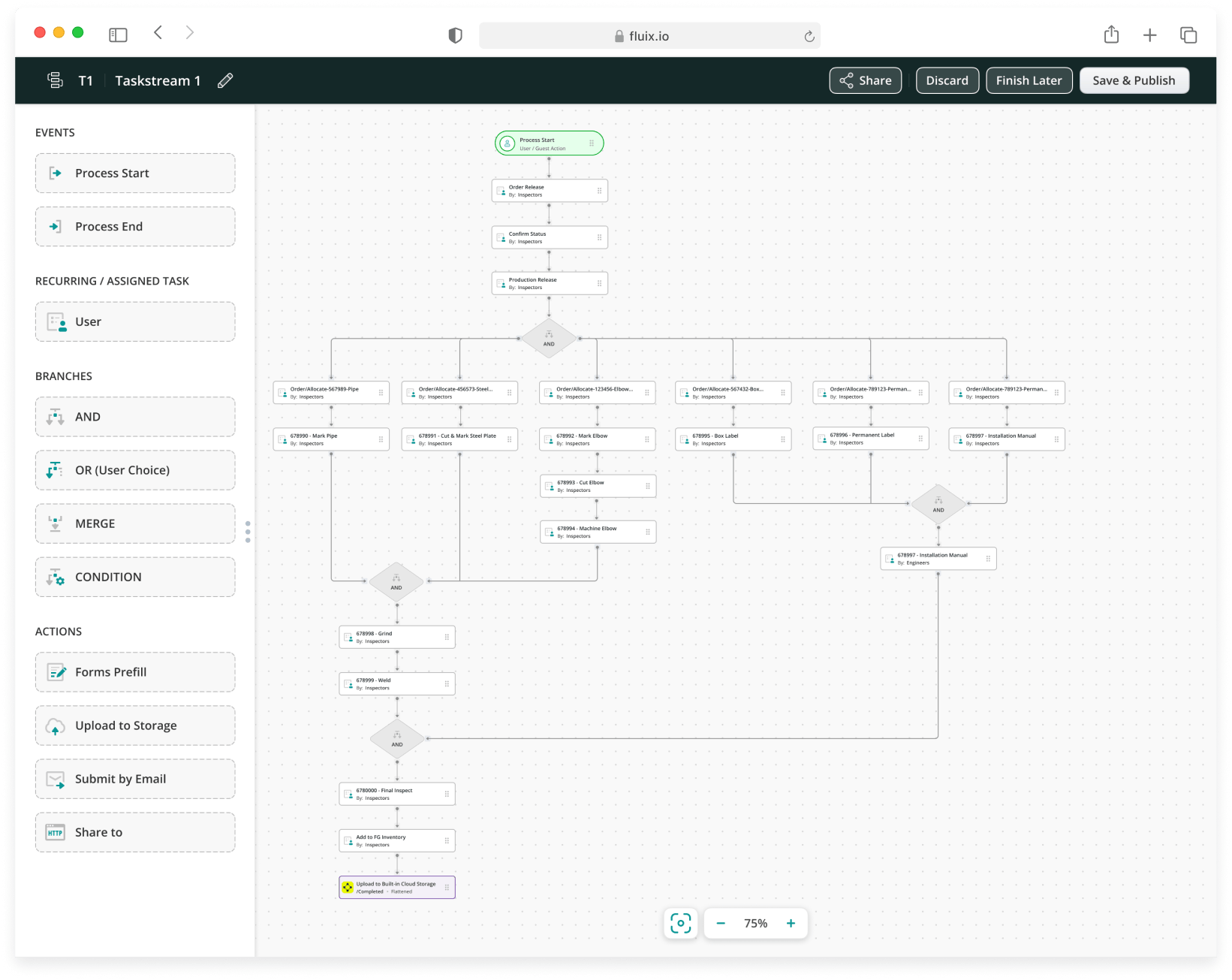
Fluix’s safety inspection software is used by teams across construction teams to run inspections, permits to work, incident reporting, and compliance documentation.
Where Fluix earns its place in contractor safety is the moment contractors are actually on site. The hardest part of managing subcontractors is getting them to complete the paperwork at all: they do not have your login, they will not download another app, and they are working where there is no signal. Fluix handles this with guest access. A contractor opens a link or scans a QR code, completes a pre-task inspection or permit-to-work form on their own phone, offline if needed, and submits it without a paid seat.
From there the workflow runs on its own. A failed item or flagged hazard becomes a corrective action assigned to a named person with a due date. A permit routes through a multi-step approval chain, and a supervisor can push it back with notes before work starts. Every record is timestamped, GPS-tagged, and signed, so when a client or regulator asks for the permit history on a job, the answer is an export, not a hunt through emails.
For general contractors using Procore, Fluix integrates directly — field inspections and contractor permits completed in Fluix flow back to the project record. And with the Field Intelligence MCP connector, safety managers can ask Claude, Copilot, or ChatGPT questions like “which subcontractors have open corrective actions on site B?” and get the answer in plain language.
Key Features
- Guest access for contractors via link or QR code
- Permit-to-work forms with conditional logic and multi-step approvals
- Work orders
- Full offline mode
- Pre-task inspections, toolbox talks, and incident reporting
- AI form generation
- Field Intelligence MCP connector for Claude, Copilot, and ChatGPT
Pricing
- Crews: $29 per user/month, 5+ users
- Operations: $49 per user/month, 15+ users
- Enterprize: Quote request, 25+ users
Ratings
4.8 — Capterra · 4.8 — G2
Improve Your Safety Operations with One of the Most Highly-Rated Tools for Contractors
2. Mitti (Formerly SafetyCulture)
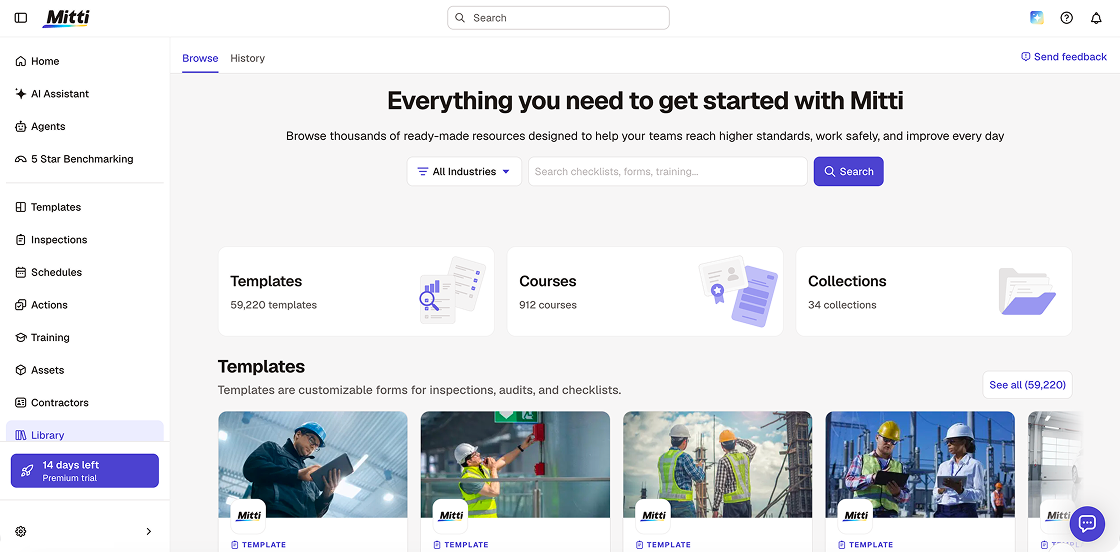
Mitti (formerly SafetyCulture, originally iAuditor) is the inspection platform many teams try first, and for contractor safety it has two clear strengths. The template library exceeds 59,000 options, so most site safety checklists are ready to use on day one. And Premium includes free guest seats, so external contractors can complete inspections without adding to your per-seat bill.
HeadsUp, Mitti’s broadcast feature, lets safety managers push short video or text updates to every crew on site and confirm who has seen them — useful for passing urgent hazard alerts to contractor teams. Since the 2026 rebrand from SafetyCulture, Mitti has also added AI Agents, an AI Assistant, AI Issue Creation, and 5-Star Benchmarking for scoring sites across a portfolio.
The limitation for regulated contractor work: once an action is closed in Mitti, it is closed. There is no native multi-tier review chain where a senior reviewer can push a permit or finding back before it counts as resolved.
Key Features
- 100,000+ customisable inspection and safety templates with AI generation
- Free guest seats for external users on Premium
- HeadsUp broadcasts with read confirmation
- Inductions and training — 1,000+ courses
- AI Agents, AI Assistant, AI Issue Creation, 5-Star Benchmarking
- Offline mobile capture
Pricing
- Free: up to 10 users
- Lite Seat: $5/seat/month
- Premium: $24/seat/month (annual) / $29/seat/month (monthly)
- Enterprise: Custom
Ratings
4.6 — Capterra
3. HammerTech
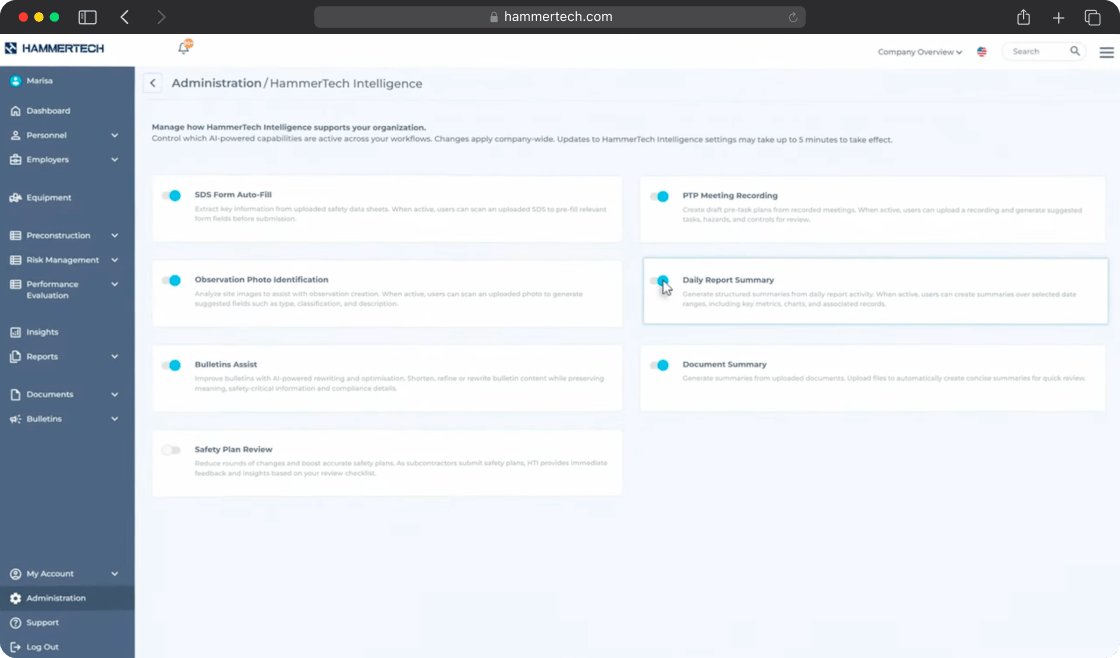
HammerTech is a construction safety and operations platform built for general contractors and EPC firms running large, multi-trade jobsites. Its strength is the subcontractor onboarding workflow: worker orientations, induction records, permits, and subcontractor compliance documents all live in one system, and subcontractors access it through the GC without buying their own licence.
HammerTech is closely associated with the Zero Harm approach common among large contractors in the UK, Australia, and New Zealand — a programme model that depends on every worker, including every subcontractor, being inducted and accounted for before work starts. For GCs running that kind of programme at scale, HammerTech is purpose-built.
The trade-off is that it assumes a dedicated safety function and a construction context. It is not a general field inspection tool for energy or utilities teams.
Key Features:
- Worker orientations and digital site inductions
- Subcontractor prequalification and compliance documents
- Permits to work and equipment registers
- Site inspections, observations, and incident reporting
- Unlimited users — subcontractors access through the GC
- HammerTech GO for smaller contractors
Pricing
Quote-based
Ratings
4.3 — Capterra
4. Procore – Best for Integrated Management
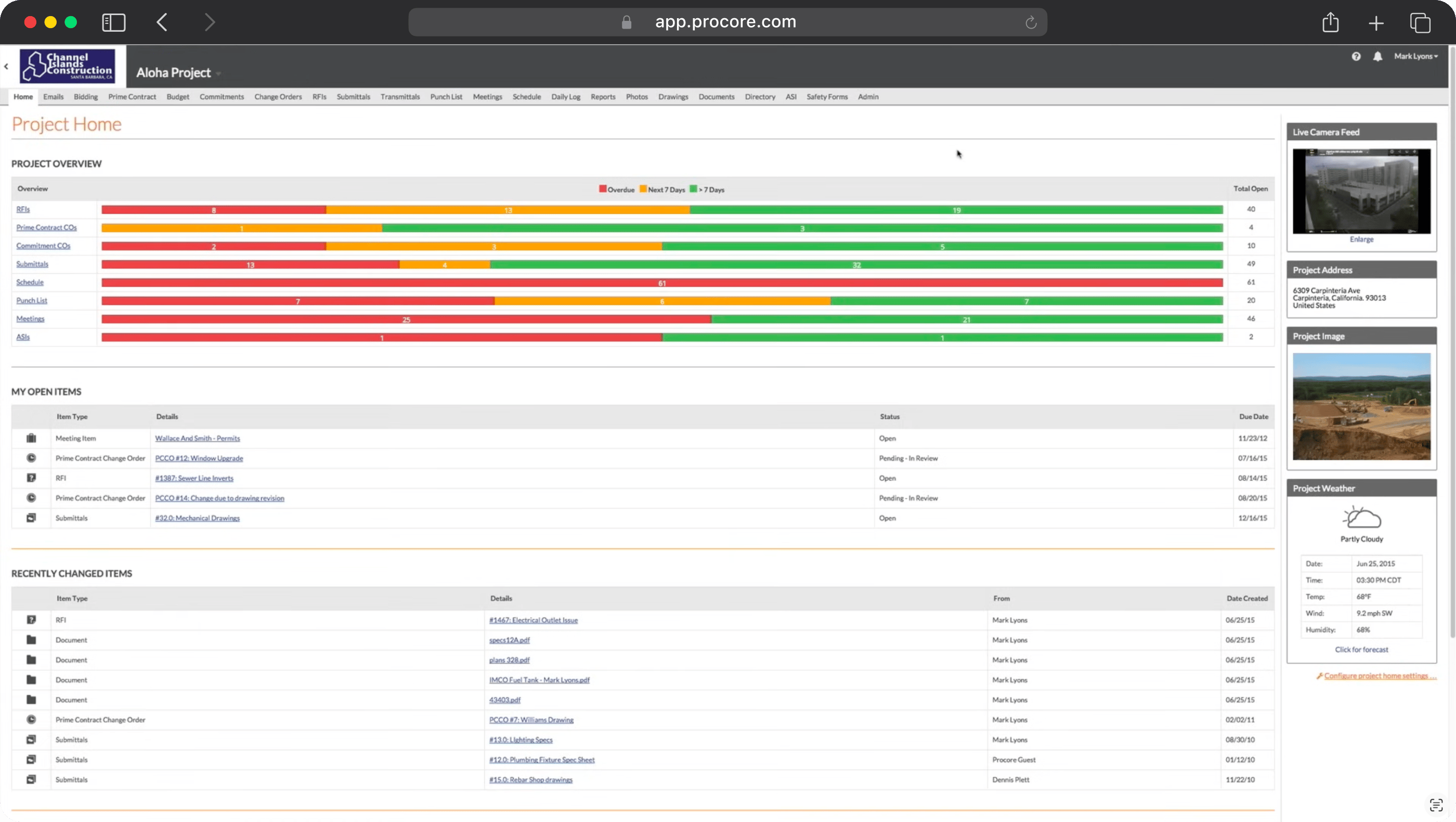
Procore is s construction project management software, not a dedicated contractor safety tool — but for general contractors already running projects in Procore, keeping safety data in the same system is a real advantage. Inspections, observations, and incidents sit next to drawings, RFIs, and subcontractor records on the same project.
Safety has been a growing focus for Procore. Procore introduced a dedicated Safety Hub that gives safety teams their own workspace with customised workflows, reporting, and project views, consolidating information so that near misses, high-risk activities, and leading indicators surface before incidents occur. The company also announced a significant upgrade to its incident management capability.
Procore uses an Annual Construction Volume pricing model, which means unlimited users within your tier — useful when many subcontractors need access. The downside is cost: for teams that only need contractor safety, it is a lot of platform to buy for one module.
Key Features
- Safety Hub with leading indicators, near misses, and high-risk activity views
- Inspections, observations, and incident management tied to project records
- Subcontractor collaboration on shared projects
- Procore Helix AI and Agent Builder
- 500+ integrations, including Fluix
Pricing
Quote-based
Ratings
4.6 — G2, 4.5 — Capterra
5. VelocityEHS
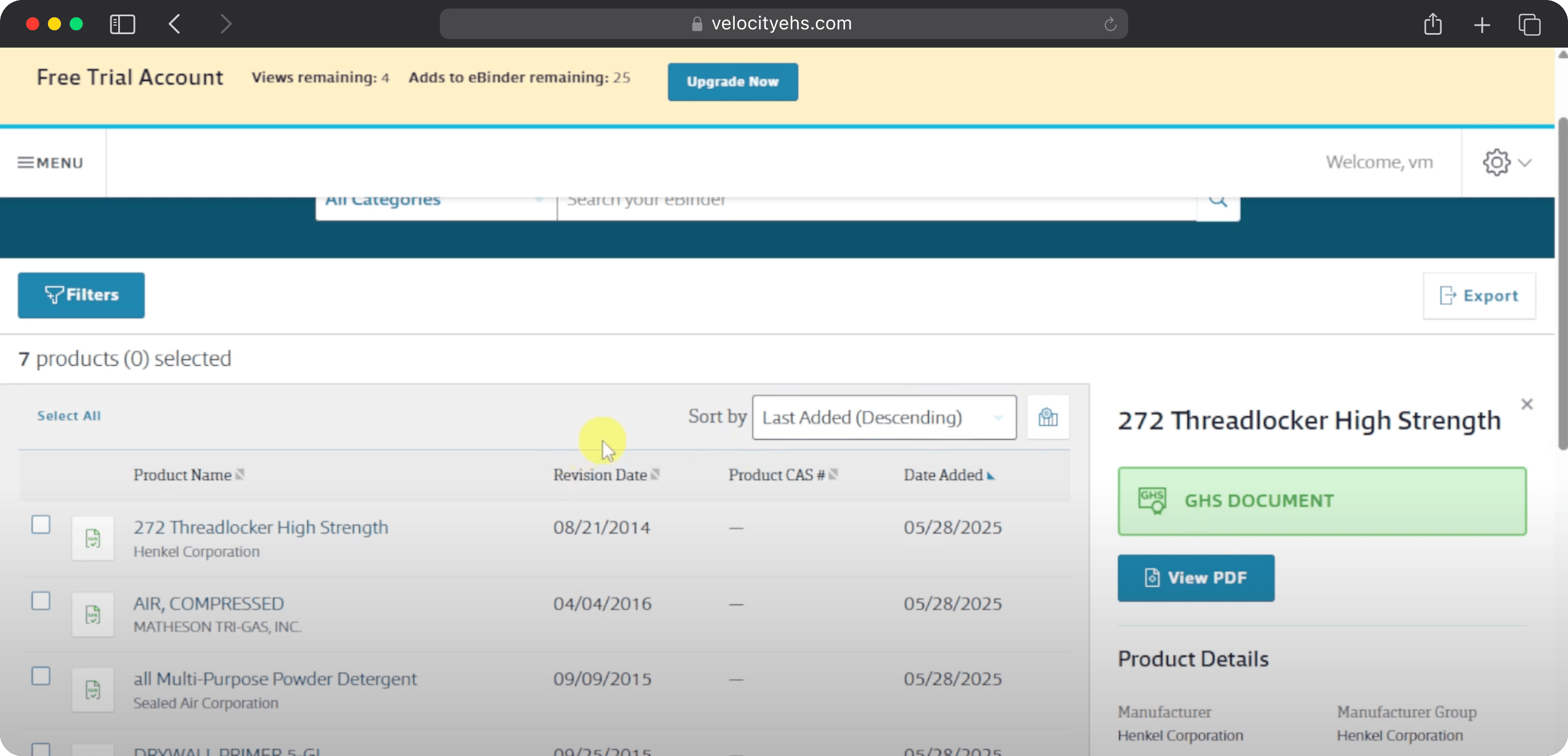
Velocity EHS offers a dedicated Contractor Safety & Permit to Work product as part of its Accelerate platform. Contractors use a self-service portal to submit qualification documents, safety records, and insurance certificates; HSE teams manage qualification, visitor access, and electronic permits to work from one place.
The 2026 standout is the Contractor Safety Verification Add-On, powered by VelocityAI, which VelocityEHS says processes certificates of insurance and OSHA logs up to seven times faster than manual review. For enterprise teams handling hundreds of contractors, document review is often the bottleneck — this targets it directly.
The trade-off is scale and setup. VelocityEHS is built for enterprise EHS departments, and some reviewers describe the contractor portal as designed more for desktop than for field mobile use..
Key Features
- Contractor self-service portal for qualification and document submission
- AI verification of certificates of insurance and OSHA logs
- Electronic permit to work
- Contractor and visitor management
- Vēlo AI assistant
- ISO 27001 and SOC 2 Type II
Pricing
Quote-based
Ratings
4.4 — G2, 4.4 — Capterra
6. Highwire
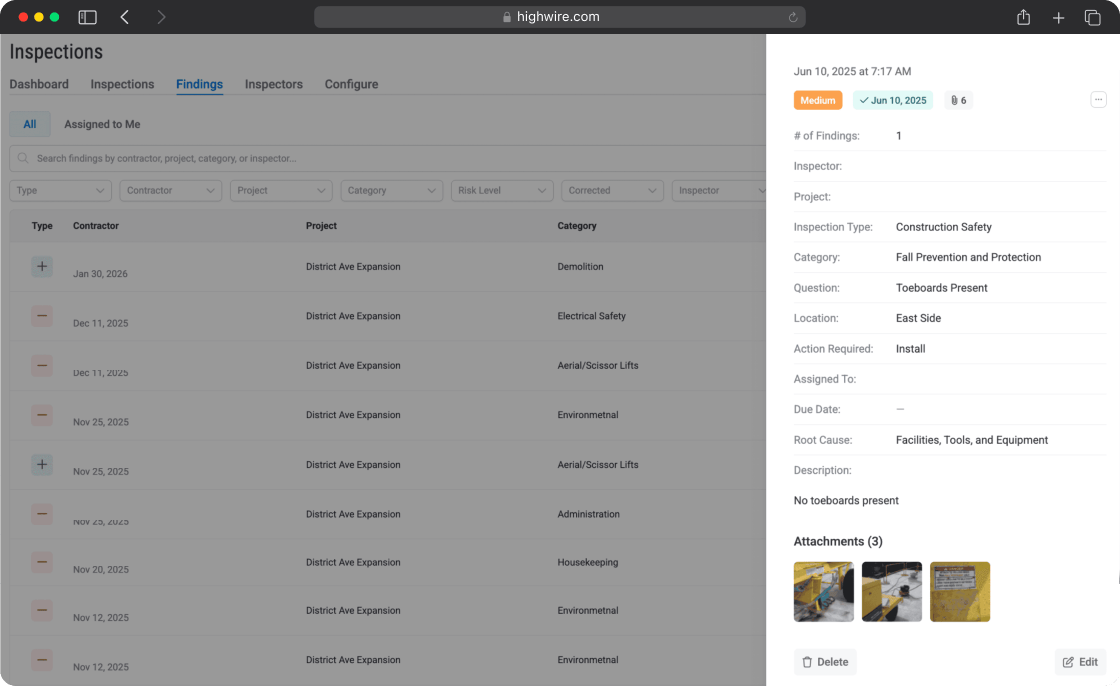
Highwire is a contractor risk management platform built for owners and general contractors on construction and capital projects. Before a contractor is awarded work, Highwire evaluates their safety record, financial health, capacity, and insurance, and produces a risk score the project team can act on. It then extends into the field with inspection tracking.
Veriforce acquired Highwire in October 2025, and in June 2026 Highwire released AI Findings for Inspections, which helps teams identify and categorise issues from field inspection data.
Highwire’s review base is small, so expect to rely more on references than on public ratings when evaluating it.
Key Features:
- Contractor prequalification and risk scoring
- Insurance and certificate tracking
- Safety, financial health, and capacity assessment
- Field inspection tracking with AI Findings
Pricing
Quote-based
Ratings
4.6 — G2, 4.8 — Capterra
7. Avetta
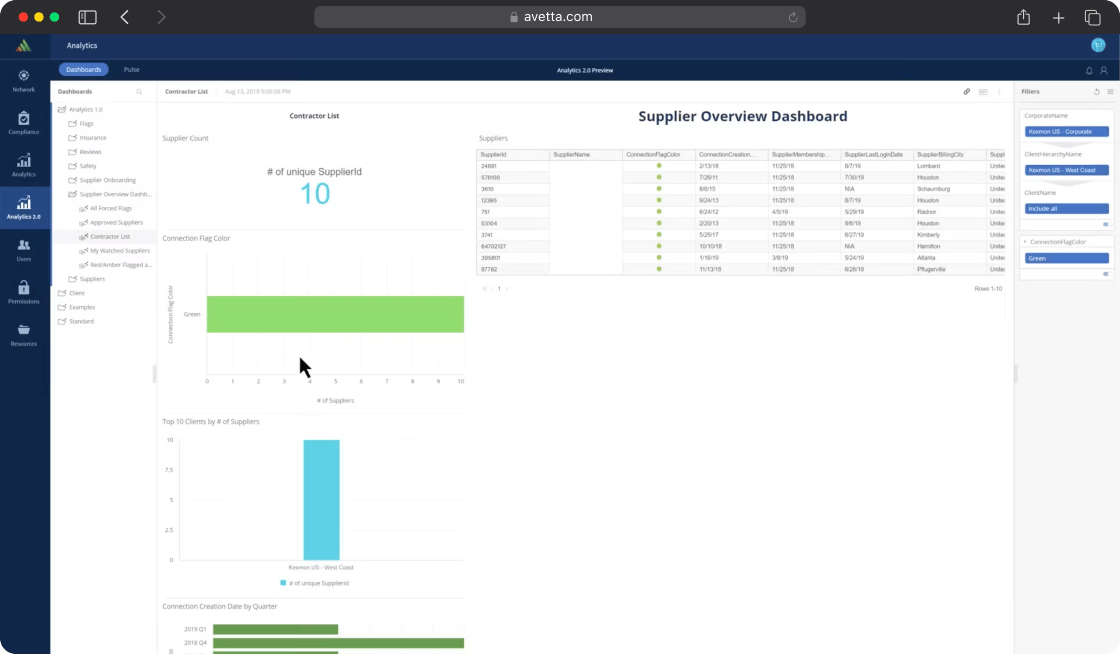
Avetta is a supply chain risk management network used by large hiring clients to prequalify contractors and suppliers. Contractors join the network, submit safety, insurance, and compliance documentation, and hiring clients see whether each supplier meets their requirements before work starts. Avetta describes its network as covering around 130,000 suppliers.
In 2026, Avetta upgraded Find Supplier within its AI-driven Avetta One platform, adding readiness benchmarks and map-based supplier discovery, and its AskAva AI assistant supports risk review.
The honest caveat: Avetta’s reviews are split. Hiring clients value the network, while many contractor-side reviewers complain about fees and support — which pulls its Capterra score down significantly. If you are the hiring client, factor in how your contractors will experience it.
Key Features
- Supplier and contractor prequalification network
- Insurance and compliance verification
- Find Supplier with readiness benchmarks
- AskAva AI risk assistant
- Supply chain risk reporting
Pricing
Quote-based
Ratings
3.7 — G2, 1.6 — Capterra
How to Choose the Right Contractor Safety Software
If your problem is vetting contractors before they arrive — expired insurance, unknown safety records, no visibility into who is qualified — start with a prequalification platform. Highwire suits construction and capital projects; Avetta suits enterprise hiring clients with large supplier networks.
If your problem is what happens once contractors are on site — inductions not completed, permits signed late, findings that never get closed — you need an execution platform. Fluix is strongest where permits and inspections need multi-step approval and contractors need to work offline without a paid seat. HammerTech is strongest for large construction jobsites with many subcontractor crews. Mitti is fastest to deploy for standard inspections.
If you want one platform across both stages — and have the budget and team to implement it — VelocityEHS covers prequalification documents and on-site permits, and Procore keeps safety inside the construction project record.
If you run a Zero Harm programme — every worker, including every subcontractor, needs to be inducted, permitted, and accounted for. That usually means pairing a prequalification platform with an on-site execution tool, so nobody reaches the site without being checked and nothing on site goes undocumented.
FAQ
- What is contractor safety management software?
Contractor safety management software helps organisations manage the safety of contractors and subcontractors across their lifecycle — from prequalification and insurance checks before work starts, to inductions, permits to work, inspections, and corrective actions on site. It replaces spreadsheets, paper permits, and email chains with a single record of who is qualified, what they are permitted to do, and what has been checked.
2. What is the difference between contractor safety software and contractor risk management software?
Contractor risk management software focuses on vetting contractors before they reach site — prequalification, insurance verification, and safety record review. Highwire and Avetta are examples. Contractor safety software focuses on managing contractors once they are on site — inductions, permits, inspections, and corrective actions. Fluix, Mitti, and HammerTech are examples. Enterprise programmes usually need both.
3. What are the top construction safety compliance platforms for enterprise contractors?
Enterprise contractors typically combine a prequalification platform such as Highwire or Avetta with an on-site execution platform such as Fluix, HammerTech, or Mitti. Procore and VelocityEHS cover both stages in one platform for teams willing to take on higher cost and implementation effort.
4. How does contractor safety software support a Zero Harm programme?
Zero Harm programmes depend on every worker being inducted, qualified, and accounted for before work starts, and on every hazard being recorded and closed. Contractor safety software makes that verifiable: prequalification confirms contractors meet requirements before they arrive, and on-site tools record inductions, permits, inspections, and corrective actions with a timestamped audit trail.
5. What are the best digital safety form tools for specialty trades?
For specialty trades — electrical, HVAC, mechanical, and utilities contractors — the deciding factor is speed and reliability in the field. Fluix suits trades that need inspections, permits, and approvals with offline mode for sites without signal. Mitti suits trades that want ready-made templates and a free starting tier.
6. Do contractors need a paid licence to use contractor safety software?
It depends on the platform. Fluix’s Operations plan gives contractors guest access through a link or QR code without a paid seat. Mitti includes free guest seats on Premium. HammerTech and Procore give subcontractors access through the general contractor. Avetta charges contractors network fees to join.