PPE protects people if it’s the right equipment, it’s been inspected, and people actually wear it. PPE management software brings that together. It helps you track expiry dates, run recurring inspections, and detect PPE compliance automatically through cameras.
This guide is for HSE leads, safety supervisors, and operations managers in construction, energy, oil and gas, utilities, and manufacturing. Here, I compare seven platforms split by the PPE job they do best, with current pricing, limitations, and a guide to picking the right type.
Contents:
How I Picked This List
As Product Lead at Fluix, I spend a lot of time looking at how field teams actually manage safety equipment. I started with more than 20 tools that appear in PPE management, PPE inspection, and PPE inventory searches, then narrowed the list using four criteria:
- PPE depth. Is PPE a real workflow in the product?
- Field reality. Does it work on mobile and offline?
- Clear job. Does it do one PPE job well — inspections, issuance and stock, or compliance detection?
- Reviewer signal. What do G2 and Capterra reviewers say after real use?
Quick Comparison
| Tool | Best for | PPE job | Starting price |
|---|---|---|---|
| Fluix | Mobile PPE inspections and corrective actions | Inspection | $29/user/month |
| Mitti (formerly SafetyCulture) | Template-led PPE checks at scale | Inspection | $24/seat/month |
| Papertrail | Harness and fall protection lifecycle | Inspection | £35/user/month |
| EcoOnline Field iD | RFID-tagged volume inspections | Inspection | Quote-based |
| iProtectU | Role-based PPE issuance and fit tests | Issuance | Quote-based |
| Sortly | Low-cost PPE stock tracking | Stock | Free / $49/month |
| Intenseye | AI PPE compliance detection | Detection | Quote-based |
7 Top PPE Management Software
1. Fluix
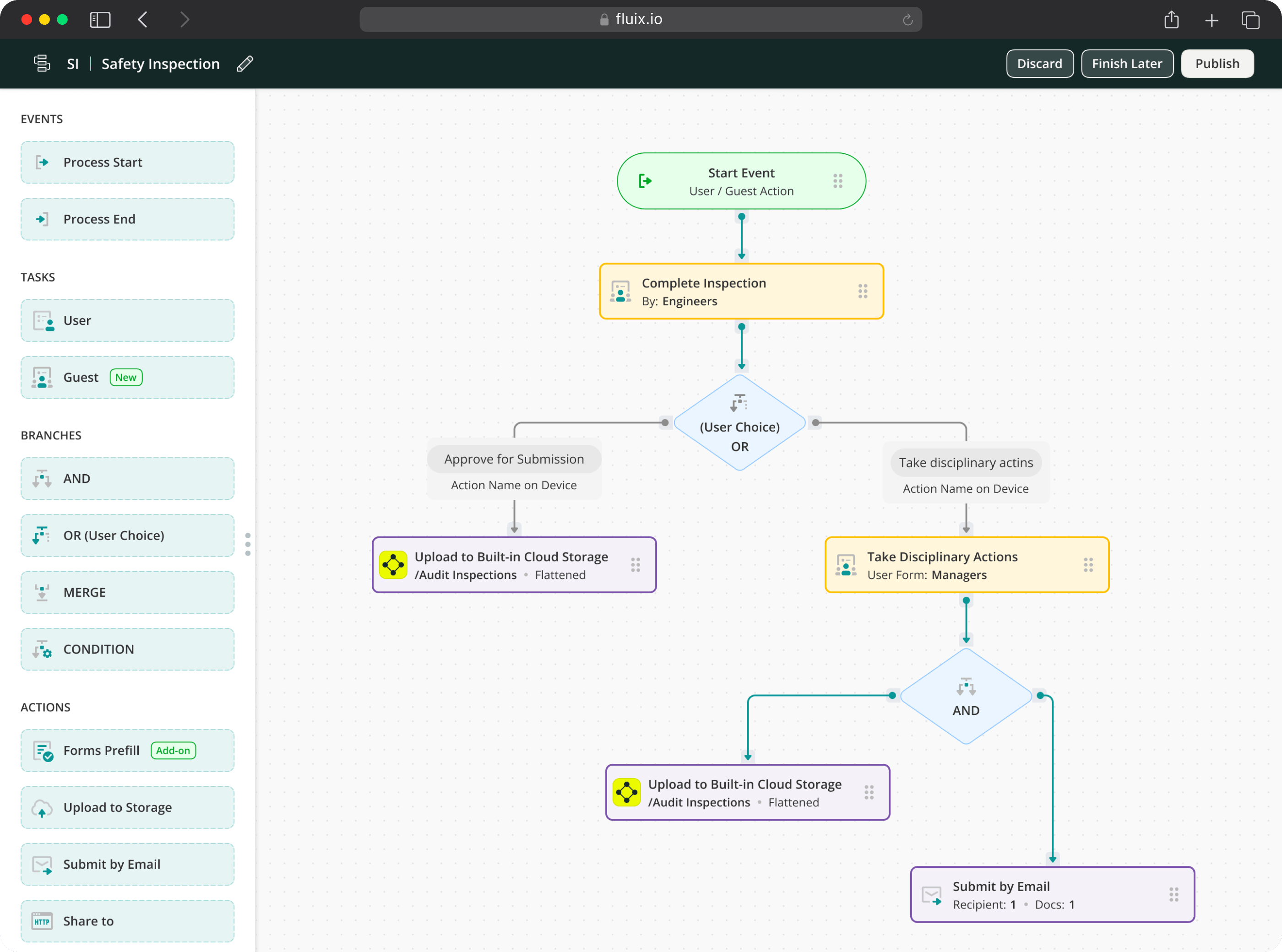
Fluix is inspection management software for field teams across construction, energy, oil and gas, aviation, and utilities that is designed run inspections, permits, incident reporting, and compliance documentation.
For PPE, Fluix covers the inspection side of the job. Field crews run scheduled checks on fall protection harnesses, lanyards, respirators, gas detectors, and other safety-critical equipment on their phone or tablet, with photos, pass/fail items, and an e-signature on every record. Inspections work fully offline, which matters when the equipment is being checked at height, offshore, or at a remote site with no signal.
What happens after a failed check is where Fluix is strongest. It automatically assigns a corrective action task to a named person with a due date, and if your process requires it, the inspection routes through a multi-step approval before it closes. Contractors can complete PPE checks through guest access via a link or QR code, without a paid seat.
For equipment beyond PPE, the same workflow covers equipment inspection software — tools, vehicles, lifting gear — so PPE checks don’t live in a separate system.
Key Features:
- Mobile PPE inspection checklists — offline, with photos, GPS timestamps, and e-signatures
- Scheduled recurring inspections with automated reminders
- Multi-step approvals with push-back before an inspection closes
- Guest access for contractors via link or QR code
- Field Intelligence MCP connector for Claude, Copilot, and ChatGPT
- Dashboards for overdue inspections and open corrective actions by site
- ISO 27001, SOC 2 Type II, HIPAA, GDPR
Pricing:
- Crews: $29/user/month, 5+ users
- Operations: $49/user/month, 15+ users
- Enterprise: Custom
Book a 30-minute discovery call with Fluix
2. Mitti (formerly SafetyCulture)
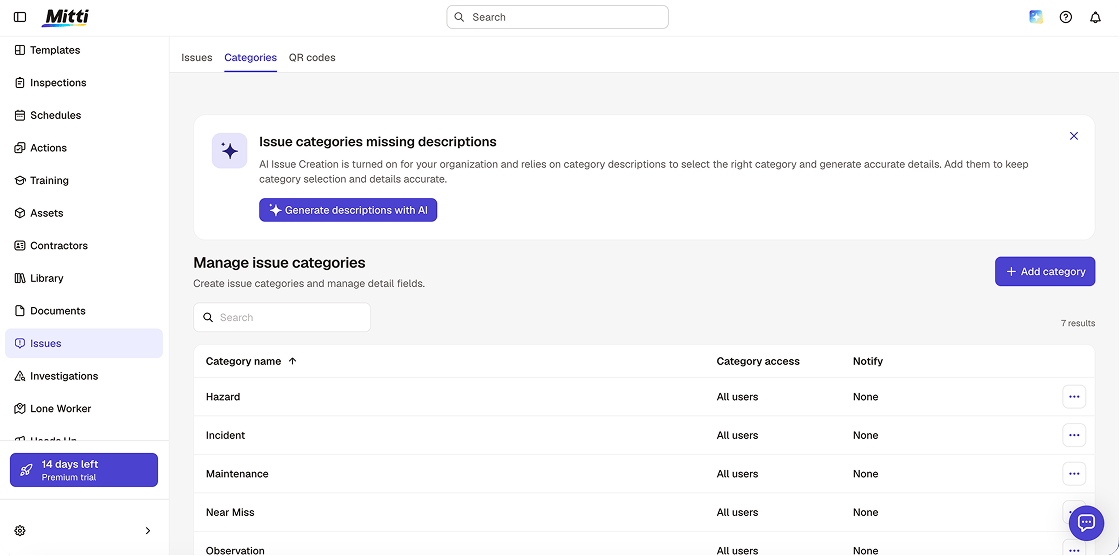
Mitti (formerly SafetyCulture, originally iAuditor) is the inspection platform many teams try first, and for PPE it has one clear advantage: speed. The template library exceeds 59,000 options, so harness, respirator, and PPE compliance checklists are ready to use on day one. Asset records can be linked to QR codes, so scanning a piece of equipment pulls up its inspection history.
The free plan covers up to 10 seats, which makes Mitti an easy starting point for small teams. Since the rebrand from SafetyCulture, Mitti has added AI Agents, an AI Assistant, and AI Issue Creation, though AI usage is now metered separately through credits.
The limitations for PPE programmes: per-seat costs climb quickly for large crews, free guest seats are limited in how many inspections they can run, and there’s no native multi-stage approval chain — once an action is closed, it’s closed.
Key Features:
- Ready inspection templates, including PPE and fall protection checklists
- QR-linked asset records with inspection history
- Mobile and offline inspections with photo capture
- Corrective actions and scheduling
- AI Agents, AI Assistant, AI Issue Creation
Pricing:
- Free: up to 10 seats
- Premium: $24/seat/month (annual) / $29/seat/month (monthly)
- Enterprise: Custom
See also: Best SafetyCulture (Mitti) alternatives →
3. Papertrail

Papertrail is built for one job and does it thoroughly: managing the full lifecycle of height safety and rope access equipment. You can import equipment from a directory of more than 120 manufacturers — including Petzl and MSA — so serial numbers, specifications, and product data don’t have to be typed in by hand. Each item is tagged with NFC, RFID, QR, or a barcode, and its full inspection history follows it until it’s retired.
Two features stand out for PPE managers. Papertrail sends product recall notifications when a manufacturer recalls equipment you own, and it generates LOLER and PUWER thorough examination certificates (essential for UK teams). Inspections can run offline on iOS and Android, and PartnerHub lets you share records with suppliers and service providers.
Key Features:
- Equipment import from 120+ manufacturers
- NFC, RFID, QR, and barcode tagging
- Product recall notifications
- LOLER and PUWER thorough examination certificates
- Offline inspections on iOS and Android
- PartnerHub for sharing records with suppliers
Pricing:
- Starter: £35/user/month (£33.25 billed annually)
- Corporate: £60/user/month, 4-user minimum
- Enterprise: Custom
4. EcoOnline
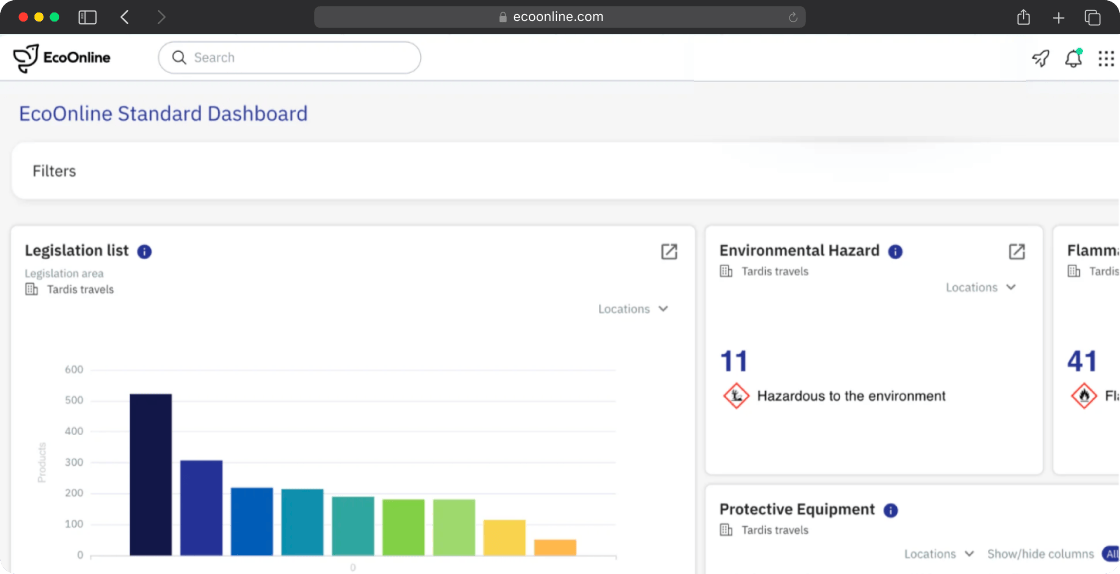
EcoOnline‘s FieldiD is designed for teams inspecting large volumes of tagged safety equipment. Each item gets an RFID or barcode tag, and rule-based scheduling sets when every item is due for inspection. Inspections run on mobile, including offline, and every result is linked back to the specific tagged item. EcoOnline positions it around keeping the PPE workers depend on safe to use and traceable.
It’s a good fit for organisations with hundreds or thousands of harnesses, lanyards, and other tagged items where scanning speed matters.
Field iD’s review base is small and mostly several years old, and the mobile app has weak app store ratings. Ask for references and test the mobile app thoroughly in a trial.
Key Features:
- RFID and barcode tagging
- Rule-based recurring inspection schedules
- Offline mobile inspections
- Item-level traceability and inspection history
Pricing: Quote-based.
5. iProtectU

iProtectU is a UK health and safety platform, and its PPE module is one of the few that handles role-based PPE allocation properly. You build PPE matrices by role and task, linked to your risk assessments, so the system knows what each worker should be issued. When PPE is handed out, it’s scanned by barcode or QR and recorded with the worker’s signature and a photo, one of the essential safety documents auditors ask to see.
The module also tracks fit tests, monitors expiry and inspection dates, and can trigger automatic re-orders when stock runs low, covering the issuance side that inspection tools like Fluix don’t. iProtectU is modular, so the full value depends on how many modules you buy, and its review base on Capterra is very small.
Key Features:
- Role- and task-based PPE matrices linked to risk assessments
- Barcode and QR issuance with signature and photo evidence
- Fit-test tracking
- Expiry and inspection date monitoring
- Automated re-orders
Pricing: Quote-based.
6. Sortly

Sortly is a general inventory app, but it’s widely used for PPE stock because it’s simple and affordable. Teams scan barcodes or QR codes to track PPE stored across warehouses, sites, and vehicles, set low-stock alerts, and add date-based reminders for expiring items. Paid plans add check-in and check-out, so you can see who has taken what.
It doesn’t do inspections, corrective actions, or role-based allocation, it’s purely about knowing what you have and where. For many smaller teams, pairing Sortly for stock with Fluix for inspections covers both jobs at low cost.
Key Features:
- Barcode and QR scanning
- Stock tracking across locations
- Low-stock alerts and date-based reminders
- Check-in and check-out (paid plans)
Pricing:
- Free: 1 user, 100 items
- Advanced: $49/month
- Ultra: $149/month
- Premium: $299/month
7. Intenseye
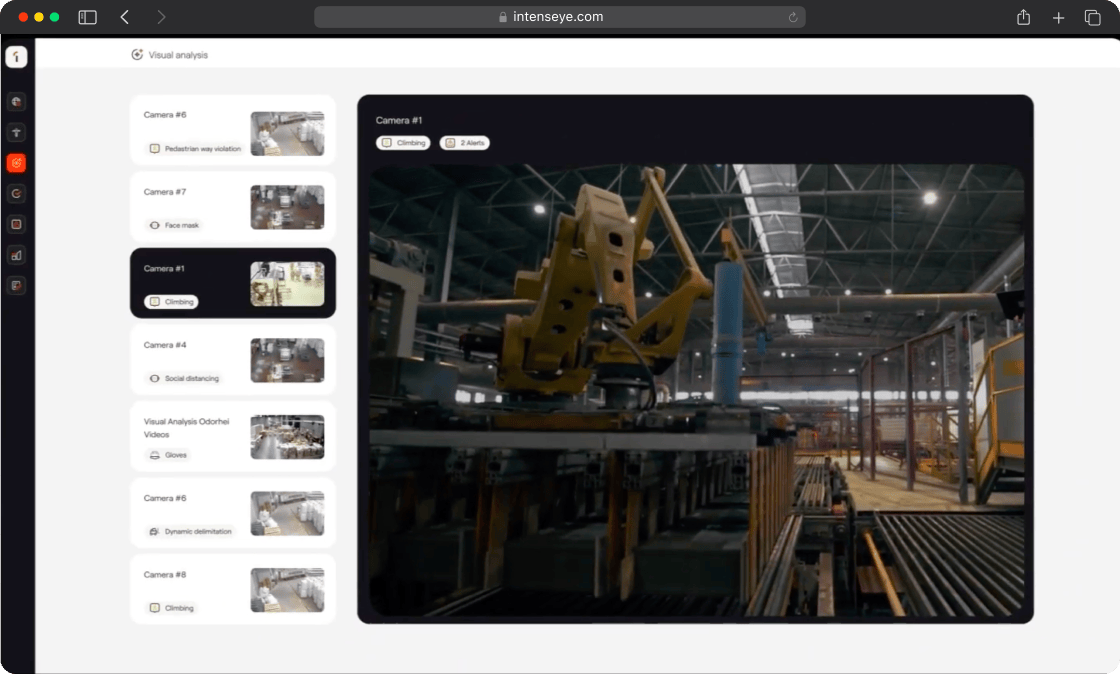
Intenseye uses computer vision on your existing CCTV cameras to detect PPE compliance in real time. It offers 12 pre-trained PPE detection use cases — including hard hats, harnesses, respiratory protection, gloves, and high-visibility vests — and lets you set rules by zone, so a hard hat requirement applies only where it should.
It answers a question the other tools on this list can’t: are people actually wearing their PPE between inspections and safety observation walk-rounds?
Two things to know before buying. It needs fixed cameras, so it suits plants, yards, and warehouses better than mobile crews. And it’s a detection layer, not a system of record — a detection still needs an inspection, investigation, or corrective-action workflow behind it, which is where a tool like Fluix fits.
Key Features:
- 12 pre-trained PPE detection use cases
- Runs on existing CCTV
- Zone-based PPE rules
- Real-time alerts and trend reporting
Pricing: Quote-based.
How to Choose the Right PPE Management Software
- If you need PPE inspections — start with Fluix which suits field teams that need offline inspections and corrective actions that actually get closed. Papertrail suits UK teams focused on height safety equipment. FieldiD suits high-volume tagged equipment. Mitti suits teams that want ready-made templates fast.
- If you don’t know who has what — start with issuance and stock. iProtectU handles role-based allocation and signed issuance records. Sortly is the low-cost option for tracking stock across sites.
- If you need to know whether PPE is actually worn — add AI detection with Intenseye, then make sure detections feed into a workflow tool.
Frequently Asked Questions
- What is PPE management software?
PPE management software helps organisations issue, track, inspect, and monitor personal protective equipment. Depending on the tool, it covers PPE issuance and stock, recurring inspections of safety-critical equipment, and compliance monitoring. It replaces paper inspection tags, stock spreadsheets, and manual sign-off sheets with a single digital record.
2. What is a PPE management system?
A PPE management system is the combination of process and software an organisation uses to make sure workers have the right PPE, that it’s in safe condition, and that it’s being used. In practice, it usually covers four steps: assessing hazards and PPE requirements, issuing PPE, inspecting and maintaining it, and replacing it when it fails or expires.
3. What is PPE inspection software?
PPE inspection software lets teams run scheduled checks on safety-critical equipment — harnesses, lanyards, respirators, gas detectors — on mobile, with photos, pass/fail results, and signatures. The best tools also create a corrective action automatically when equipment fails, so it isn’t put back into use. Fluix, Papertrail, Mitti, and EcoOnline Field iD are examples. See how Fluix handles safety inspection software for field teams.
4. What are the best PPE compliance tracking solutions in 2026?
It depends on what “compliance” means for your team. For inspection compliance, Fluix, Papertrail, and Mitti track whether every item has been inspected on time. For issuance compliance, iProtectU records who received which PPE, with signatures. For usage compliance, Intenseye detects whether PPE is actually being worn on camera.
5. Which type of PPE software do you need?
PPE management covers three different jobs. Most teams need one primarily, and some need two working together.
- PPE inspection software — recurring checks on harnesses, lanyards, respirators, and other safety-critical equipment, with records, photo evidence, and corrective actions when something fails. Fluix, Mitti, Papertrail, EcoOnline Field iD.
- PPE issuance and stock management — who has been issued what, sign-off when they receive it, stock levels, expiry dates, and re-orders. iProtectU, Sortly.
- PPE compliance detection — AI computer vision that spots missing hard hats, harnesses, or vests on camera in real time. Intenseye.
6. What is role-based PPE allocation?
Role-based PPE allocation means defining which PPE each job role or task requires — usually based on a risk assessment — and issuing it automatically according to that matrix. iProtectU is built around this, with PPE matrices linked to roles, tasks, and risk assessments, and signed issuance records.
7. What are PPE monitoring solutions?
PPE monitoring solutions track whether PPE is being used and maintained correctly. This can mean inspection monitoring — using inspection data to check that equipment is inspected on schedule — or real-time usage monitoring through AI computer vision, as Intenseye does with existing CCTV cameras.
8. What is PPE vault software?
“PPE vault” usually refers to smart lockers or vending machines that dispense PPE to workers and log who took what. The software behind them controls access and tracks usage and stock. None of the seven tools above is a vending system — if that’s what you need, look at industrial vending providers — but stock tools like Sortly and issuance tools like iProtectU cover the record-keeping side without the hardware.
9. Does PPE inspection software work offline?
Most dedicated inspection tools do. Fluix, Papertrail, Mitti, and EcoOnline Field iD all support offline inspections, which matters when PPE is checked at height, offshore, or at remote sites. Test offline mode with photo capture during any trial.