As suggested by its name, SiteCapture is a strong tool for photo-driven documentation across industries. It tie photos and video to assets so inspections stay repeatable. But once you add complex compliance like OSHA and ISO, offline conditions, or multi-stage approvals, limitations start to show up.
I’ve built this guide for operations, HSE, quality, and field service leaders comparing or switching from SiteCapture. You’ll get a look at SiteCapture’s strengths and limits, a side-by-side comparison matrix, and six alternatives ranked for real field work. Every recommendation is backed by a sourced rating, price, or feature.
Top Picks at a Glance
| Tool | Best For | Key Strength | Starting price |
|---|---|---|---|
| Fluix | Inspections for field teams | Offline reliability, automated corrective actions, 1,050+ integrations | $29/user/mo |
| CompanyCam | Photo documentation for contractors | Unlimited cloud storage, AI features, idiot-proof adoption | $63/mo |
| Fulcrum | GIS and environmental field data | Geospatial mapping, voice-activated inspections | $39/user/mo |
| Inspectivity | Asset-heavy industrial inspections | 3D asset visualization, corrosion mapping, interactive drawings | AUD 75/mo |
| EcoOnline | EHS and environmental compliance | ISO 14001/45001 workflows, chemical management | Quote |
| GoCanvas | Customizable mobile forms | Offline forms, photo-to-line-item association, dispatch and scheduling | $29/user/mo |
How I Picked These SiteCapture Alternatives
I evaluated each alternative against six criteria drawn from what ops managers, safety leads, and HSE directors consistently flag as the gaps SiteCapture leaves open:
- Media capture – high-resolution photo capture with markup, GPS/timestamp auto-tagging, and structured filing for inspection traceability
- Compliance-ready reporting – support for frameworks like OSHA, ISO, and EPA
- Workflow automation – routing, approvals, and follow-up assignment after capture
- Offline performance – reliable capture and sync in low- or no-signal conditions
- Integrations – how easily data flows into your existing systems
- Transparent pricing – published, predictable per-user or per-tier costs
SiteCapture Overview: Strengths and Limitations
SiteCapture is an AI-powered field operations platform and mobile app for jobsite documentation, quality control, inspections, estimating, and reporting. Its core value is photo and video capture tied to assets. SiteCapture reports more than 10,000,000 projects completed and over 500,000,000 photos taken, with customers including Palmetto, FirstKey, Sunrun, and Powur.
In 2026, the company launched SiteCaptureAI. It detects and tags objects and conditions, extracts text from images, generates summaries, and transcribes video narration. It also sends real-time alerts for missing documentation before crews leave site. SiteCapture reports this meaningfully improves documentation completeness. That is a meaningful gain for teams whose main problem is incomplete capture.
Where SiteCapture Falls Short
The gaps show up once your process needs to change or scale (as per reviews on Capterra):
- Templates are “go-forward only”
- Limited advanced mobile capabilities
- Confusing template setup
Pricing starts at $130 per month for 4 users (Basic tier), with Professional and Premium tiers above it plus per-additional-user fees. A 14-day free trial is available.
If your bottleneck is capturing more complete photos, SiteCapture handles that well. If your bottleneck is what happens after the photo – approvals, compliance, and safety inspections – check the alternatives below.
The 6 Best SiteCapture Alternatives in 2026
1. Fluix: Best for Inspections for Field Teams
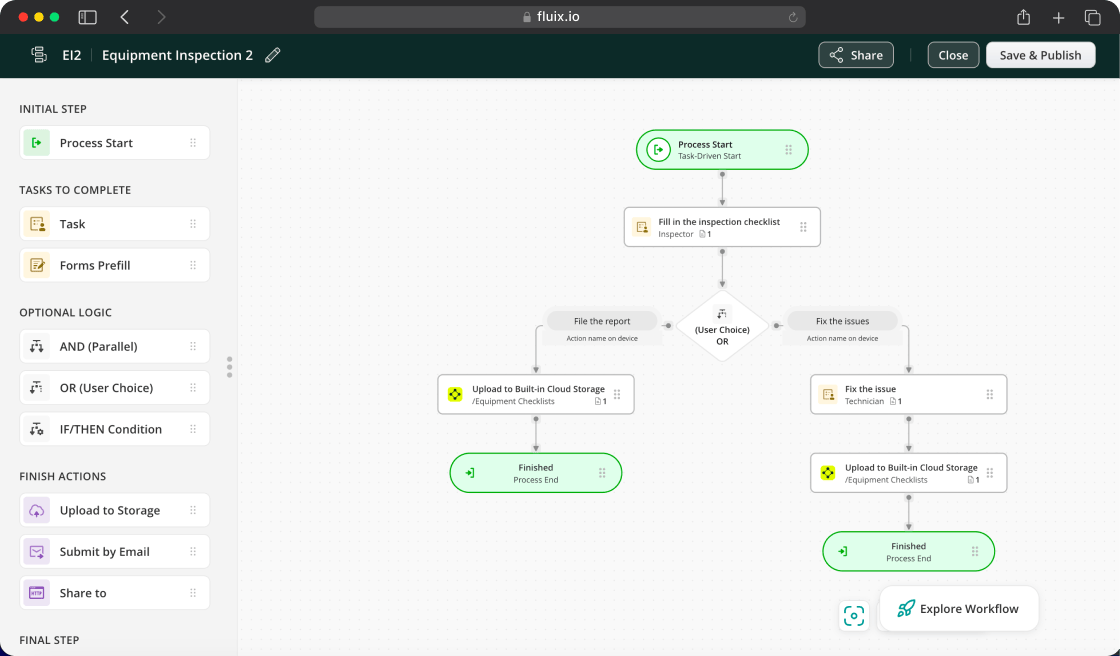
Fluix is inspection management software built for field teams who need routing inspection findings to the right reviewer, triggering corrective actions, generating audit-ready reports automatically, and filing everything to your preferred cloud storage without manual steps. That distinction matters most for businesses in regulated industries like construction, energy, utilities, manufacturing, aviation, where an inspection finding is a workflow trigger for next steps.
Offline mode is another platform’s win. Crews capture and annotate offline on iOS or Android, then auto-sync with GPS, timestamps, and form data the moment they reconnect.
I’ve seen teams managing three separate tools alongside SiteCapture (a form builder, photo app, a workflow tool, a task manager, a reporting spreadsheet) consolidate all into Fluix. The result is a smoother flow between a field finding and its resolution.
For teams managing OSHA, ISO, or EPA frameworks, Fluix makes compliance scalable. Smart forms with conditional logic, multi-stage approval routing, and integrations mean field data reaches the right systems without manual export.
Key Features
- Digital checklists and AI form builder
- Photo documentation with geotagging and timestamps
- Offline mode with reliable photo sync
- Inspection workflows with conditional logic
- Multi-stage approval routing
- Issue reporting
- Analytics and integrations
Fluix Pros
- Multiple photo upload in one field
- Offline reliability
- Fast deployment with dedicated onboarding support
Fluix Cons
- Android experience still catching up to iOS
- Minimum user requirement. The entry plan requires 5+ users
Pricing
- Crews: $29/user/month (5+ users)
- Operations: $49/user/month (15+ users)
- Enterprise: Custom (25+ users)
What Customers Say
Fluix holds a 4.8 out of 5 on G2 and a 4.8 out of 5 on Capterra. Results include faster checklist completion, annual work hours saved, and a full shift to paperless operations. You can read the detail in Fluix customer stories.
Already managing inspections in the field?
See how Fluix connects inspection findings to corrective actions and audit-ready reports
2. CompanyCam: Best for Photo Documentation for Contractors
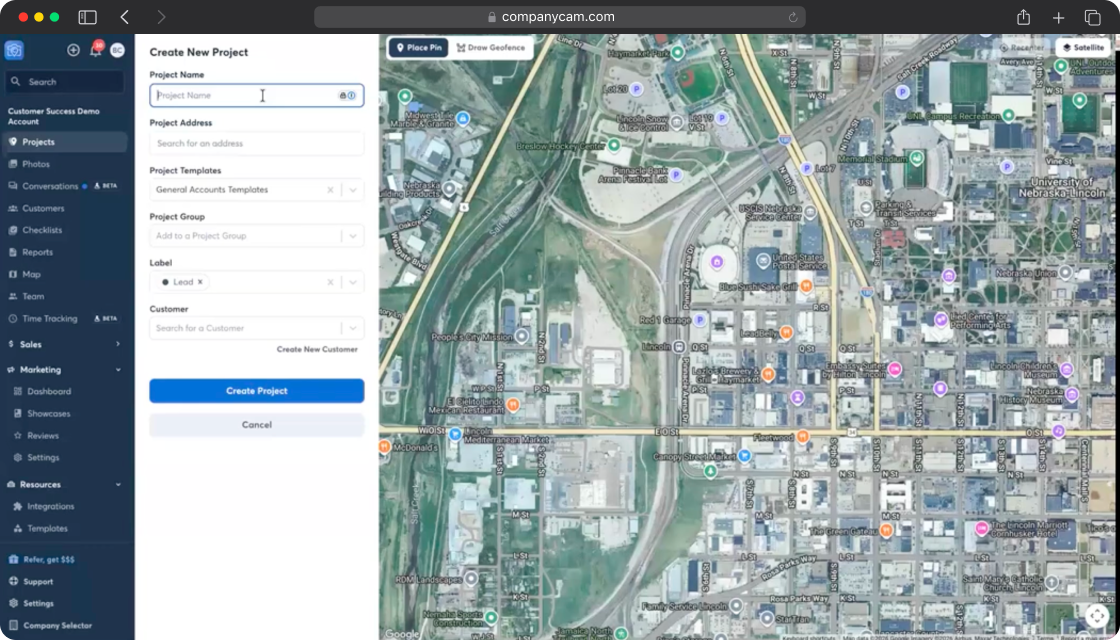
CompanyCam is a photo and video documentation platform built specifically for contractors – roofing, restoration, solar, remodeling. It sits closest to SiteCapture in its core positioning: the job is photo capture, and everything else serves that.
The differences from SiteCapture are adoption ease and the depth of contractor-specific features. Redditors consistently describe CompanyCam as “idiot-proof” – a real advantage for crews that resist technology adoption. Features like dual video mode (front and back camera simultaneously), LiDAR measurement, AI-powered photo summaries, before-and-after comparisons, and project QR codes are built specifically for the visual documentation patterns that contracting work demands.
Teams that have outgrown SiteCapture because it’s too expensive for what it does should evaluate CompanyCam carefully, Reddit practitioners note it “gets pricey fast” for growing crews, though the per-project photo organization and integrations are considered superior by those who’ve used both.
Key Features
- Unlimited cloud storage with auto-organized project history
- Timestamped and GPS-tagged photos and videos
- AI-powered photo summaries
- Dual video mode (iOS only)
- Project QR codes for on-site access
- Checklists, project tasks, and team collaboration
- Galleries, timelines, and shareable client updates
CompanyCam Pros
- Easiest adoption on this list
- Contractor-specific features
- Strong integration ecosystem. Connects with JobTread, Knowify, QuickBooks, and other contractor management tools already in use.
CompanyCam Cons
- Photo documentation only. No multi-stage approval workflows, OSHA/ISO compliance reporting, or corrective action tracking.
- Pricing scales quickly for teams.
- Dual video and LiDAR are iOS only. Android teams lose access to two of the most-cited differentiating features.
Pricing
- Core: $63/month
- Crew: $119/month
- Scale: $199/month
- Enterprise: Custom
What Customers Say
CompanyCam is widely regarded as a leader in pure photo documentation. It offers a range of plans (Core, Crew, Scale, and Enterprise) to fit different team sizes. That said, reviewers note that cost scales quickly, and some report performance glitches, slow photo loading, and complaints in low-signal connectivity. Larger operations also flag limited ERP integration.
3. Fulcrum: Best for GIS and Environmental Field Data
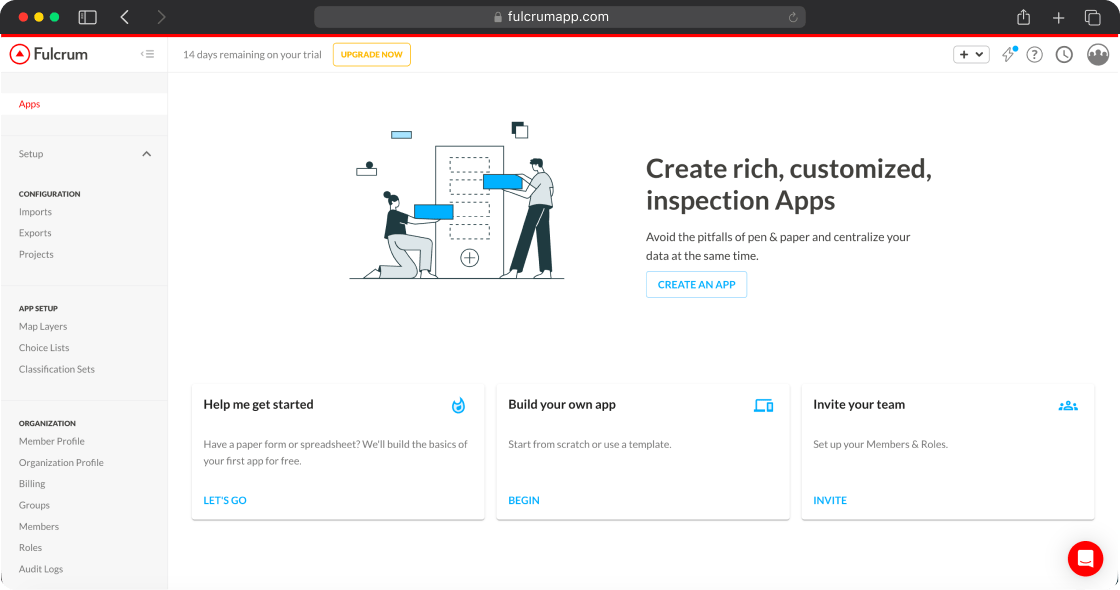
Fulcrum is built for teams that need to see field data plotted on a map. It geotags every photo and plots it on interactive maps, so you can analyze findings by place. Voice-activated inspections speed up capture, and automated workflows route work by input, location, or risk. It runs offline and connects to GIS and enterprise integrations.
The platform also handles workflow automation reliably, triggering follow-up actions based on input type, location, or risk level, online or offline.
Where Fulcrum differs is orientation: it is built around location intelligence and GIS-driven data collection. So if the geographic dimension of your field data is as important as the inspection finding itself, Fulcrum is the stronger fit.
Key Features
- Geospatial mapping of visual documentation
- Voice-activated inspections
- Location intelligence with visual pattern analysis
- Offline capability
- Custom dashboards with geographic filtering
- Integration with GIS systems and enterprise platforms
Fulcrum Pros
- GIS integration is native
- Voice-activated form filling
- Multi-language support
Fulcrum Cons
- Not a workflow management platform
- GIS dependency. Teams that don’t need spatial analysis don’t get the same value from Fulcrum’s core differentiator.
Pricing
- Professional: $39/user/month (billed annually)
- Elite: $52/user/month (billed annually)
- Enterprise: Custom pricing
What Customers Say
Fulcrum holds a 4.6 out of 5 on G2 and a 4.7 out of 5 on Capterra. That strong showing reflects its dependable geospatial focus.
For teams weighing map-first tools specifically, I compare the field in this guide to Fulcrum alternatives.
4. Inspectivity: Asset-Heavy Industrial Inspections
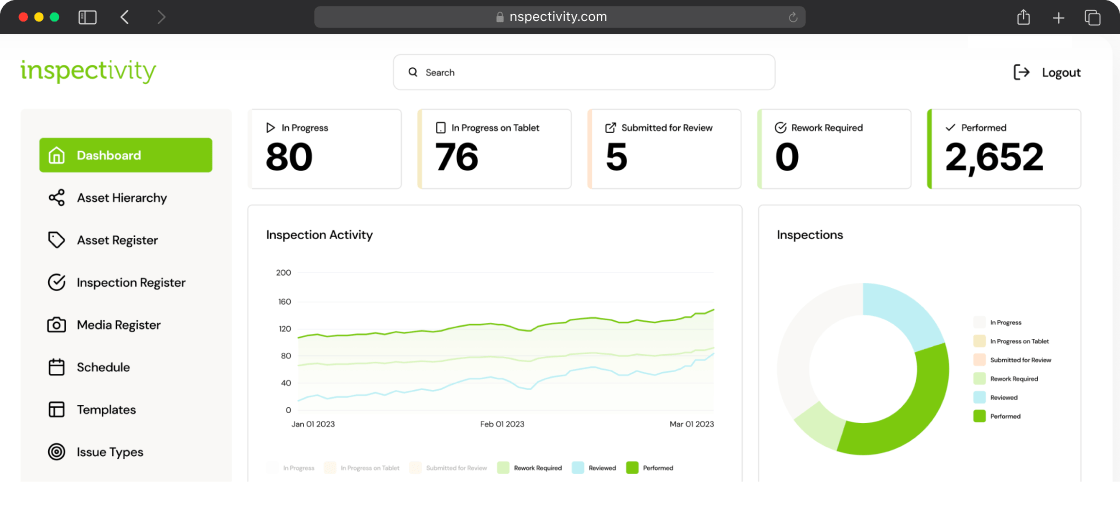
Inspectivity is built for industrial sector — oil and gas, utilities, and heavy asset environments where inspections aren’t just checklists. They’re tied to asset hierarchies, site plans, and 3D models, so every finding is traceable to a specific component or location on a living map of your operation.
Where SiteCapture captures and files photos, Inspectivity connects visual findings to structured asset records – corrosion mapping with progression tracking, interactive drawings, and technical specification links that give industrial inspection teams a depth of context that a general photo-capture tool doesn’t provide.
If your team is managing assets like pipelines, pressure vessels, or industrial equipment where defect history matters as much as the current finding, Inspectivity is worth evaluating seriously.
Key Features
- Interactive drawings with visual defect mapping
- 3D asset visualization
- Asset hierarchy navigation
- Corrosion mapping with visual progression tracking
- Technical specification linking to visual verification
- API integrations
- Offline capability
Inspectivity Pros
- Asset-depth that SiteCapture doesn’t have
- 3D visualization
- Built for high-stakes industrial environments
Inspectivity Cons
- Strong local market orientation
- Narrower workflow automation
Pricing
- Enterprise: Custom pricing
- Essentials: AUD 75/month
- Professional: AUD 600/month
What Customers Say
Inspectivity holds a 4.7 out of 5 on Capterra. One practical note: the platform is English-only, which may limit multinational teams.
If you’re evaluating this category, my roundup of Inspectivity alternatives covers the trade-offs in more depth.
5. EcoOnline: EHS and Environmental Compliance
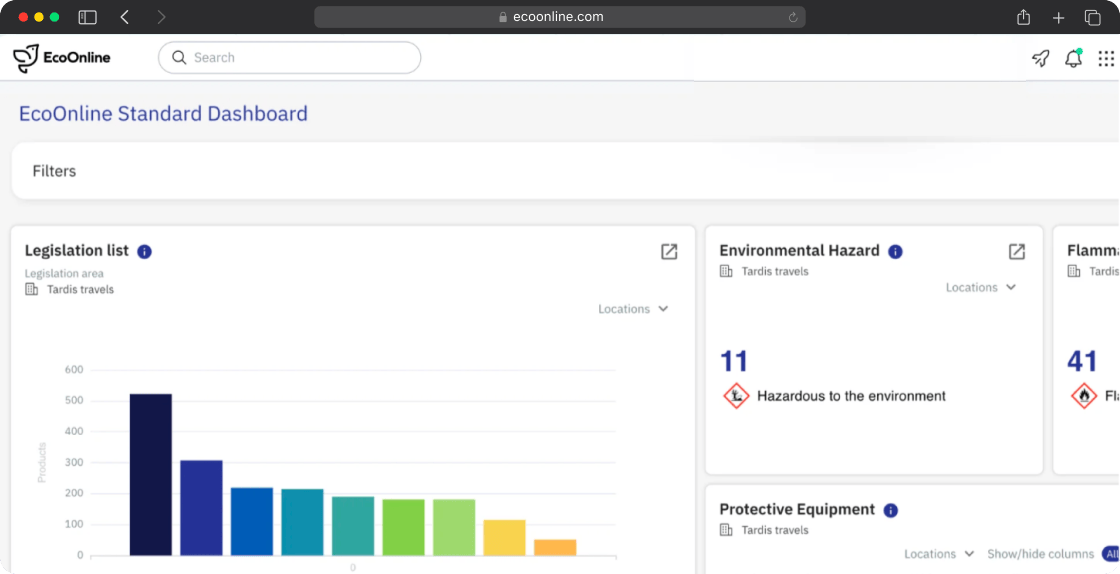
EcoOnline is a comprehensive EHS platform that structures visual field data around health, safety, and environmental workflows. Where SiteCapture stores and shares photos, EcoOnline links every image to incidents, hazards, and environmental checks, feeding directly into investigations, corrective actions, and regulatory reports aligned with ISO 14001, ISO 45001, and SEVESO III.
For teams in European regulated industries – manufacturing, chemicals, oil and gas – where EHS compliance is the primary driver and field documentation is evidence in a regulatory framework, not just a project record, EcoOnline provides the depth of integration that a photo-capture tool doesn’t.
Multi-language support across several European languages and availability on iOS and Android make it a practical option for operations spanning multiple countries and regulatory environments.
Key Features
- Incident investigation with visual evidence workflows
- Safety observation reporting
- Chemical management with visual verification
- Risk assessment matrices
- Compliance reporting with integrated photo documentation
- Safety data sheet management with visual hazard identification
EcoOnline Pros
- Structured around EHS workflows, not just photo capture.
- ISO 14001 / ISO 45001 / SEVESO III alignment.
- Multi-language support.
EcoOnline Cons
- Contact-for-pricing model.
- Less workflow automation depth.
Pricing
- Enterprise: Custom pricing
- Starter: Contact for pricing
- Business: Contact for pricing
What Customers Say
EcoOnline holds a 4.3 out of 5 on G2 and a 4.6 out of 5 on Capterra, reflecting solid adoption among safety-focused teams.
6. GoCanvas: Best for Customizable Mobile Forms
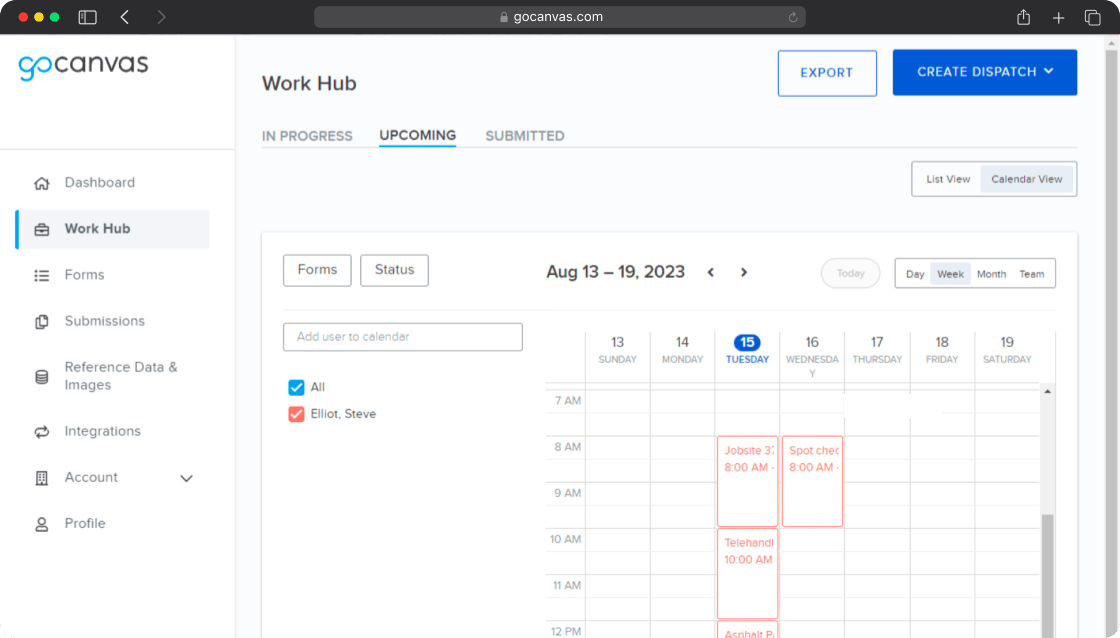
GoCanvas is a digital forms and field workflow platform used across construction, field services, manufacturing, oil and gas, HVAC, and transportation. Where SiteCapture and CompanyCam are built around photo capture, GoCanvas is built around replacing paper forms.
For teams coming from SiteCapture who need more than photo documentation – specifically, structured data capture tied to line items, job histories, asset records, and dispatch scheduling – GoCanvas closes that gap without the implementation overhead of a full inspection management platform like Fluix. Reddit practitioners describe it as covering “85% of what I need” for construction management workflows, with photo-to-line-item association and offline capability as the standout features.
The honest limitation, sourced directly from practitioners: there’s a steep learning curve to get the most out of it, and teams that need complex multi-user approval workflows or compliance-grade reporting will find GoCanvas’s form builder requires significant configuration to match what purpose-built inspection software provides out of the box.
Key Features
- Configurable digital forms with offline access and automatic sync
- Photo capture associated with individual form line items
- Dispatch and scheduling with calendar integration
- Multi-user workflows and customer and project management
- Dynamic and live data sources for auto-populating form fields
- API access and integration with QuickBooks, Salesforce, and other tools
- Compliance and safety checklists with certification tracking
- Custom PDF report generation
GoCanvas Pros
- Photo-to-line-item association. Every photo attaches directly to the specific form field or line item it documents — more structured than SiteCapture’s folder-based organization.
- Strong offline capability. Forms save locally and sync automatically when connectivity returns — a consistent practitioner strength cited across Reddit discussions.
- Broader workflow coverage than SiteCapture or CompanyCam. Dispatch, scheduling, compliance checklists, and maintenance management are native, not add-ons.
GoCanvas Cons
- Steep learning curve. Practitioners consistently flag that getting the most out of GoCanvas requires significant setup investment — it covers 85% of needs well, but the remaining 15% requires configuration expertise.
- Not a purpose-built inspection platform. Teams that need OSHA/ISO-aligned compliance workflows, multi-stage approval routing, or corrective action tracking will need Fluix rather than GoCanvas.
- Per-user pricing with a 3-user minimum. All plans require at least 3 users billed annually — less flexible for very small teams.
Pricing
- Max: $49/user/month
- Essentials: $29/user/month
- Pro: $39/user/month
What Customers Say
GoCanvas is widely adopted for mobile forms across field trades, with more than 5,000 companies using it.
What Is the Right SiteCapture Alternative for You?
There’s no single best tool — there’s a best tool for your bottleneck. Use this quick decision guide.
- Photo-first documentation with fast, organized capture: choose CompanyCam.
- GIS and geospatial field data on interactive maps: choose Fulcrum.
- Asset-heavy industrial inspection tied to hierarchies and 3D models: choose Inspectivity.
- EHS and safety compliance built around HSE standards: choose EcoOnline.
- Customizable mobile forms to replace paper: choose GoCanvas.
- Regulated, field inspection with automation: choose Fluix.
Frequently Asked Questions
1. What does SiteCapture do?
SiteCapture is a photo-driven field inspection platform used primarily in construction, property management, and solar. It enables field teams to capture, annotate, and file large volumes of images with basic report generation. It is best suited for residential and light commercial sectors where visual documentation is the primary need and workflow complexity is low.
2. What are the main limitations of SiteCapture?
SiteCapture’s main limitations are workflow automation depth and compliance capability. It doesn’t natively support multi-stage approvals, corrective action tracking, or audit-ready records aligned with OSHA, ISO, or EPA requirements. Teams in high-risk or heavily regulated industries typically outgrow it as compliance requirements increase.
3. What is the best SiteCapture alternative in 2026?
For regulated, asset-heavy field inspection, Fluix is the best overall alternative. It adds automated workflows, multi-stage approvals, OSHA/ISO/EPA compliance, and 1,050+ integrations on top of offline capture. It also holds 4.8 out of 5 on both G2 and Capterra.
4. What is the best SiteCapture alternative for photo-first jobsite documentation?
CompanyCam is the strongest choice for pure photo documentation. It auto-organizes photos by project with GPS tags and timestamps and added AI estimating and invoicing capabilities powered by Beam Finance in 2026. Pricing starts at $63 per month (Core, 1 user included; additional users $29 each).
5. SiteCapture vs Fluix — which is better for compliance and inspections?
Fluix is built for compliance and inspection depth. It supports OSHA, ISO, and EPA frameworks with multi-stage approvals and e-signatures, while SiteCapture focuses on photo and video documentation. If your work triggers approvals and audit trails, Fluix closes that loop.
6. Is there a cheaper or free SiteCapture alternative?
Fluix starts at $29 per user per month for the Crews tier. SiteCapture’s entry price is $130 per month for 4 users, about $32.50 per user. So Fluix Crews can be lower per user for small teams. Fulcrum’s paid plans start at around $39 per user per month. Most tools here, including SiteCapture, offer a free trial rather than a permanently free plan.