Most safety inspections programmes have a compliance problem. They have a confidence problem. The forms get filled, the scores look green, and somewhere on a site with 90,000 workers, five obvious hazards go unrecorded because they weren’t on the form.
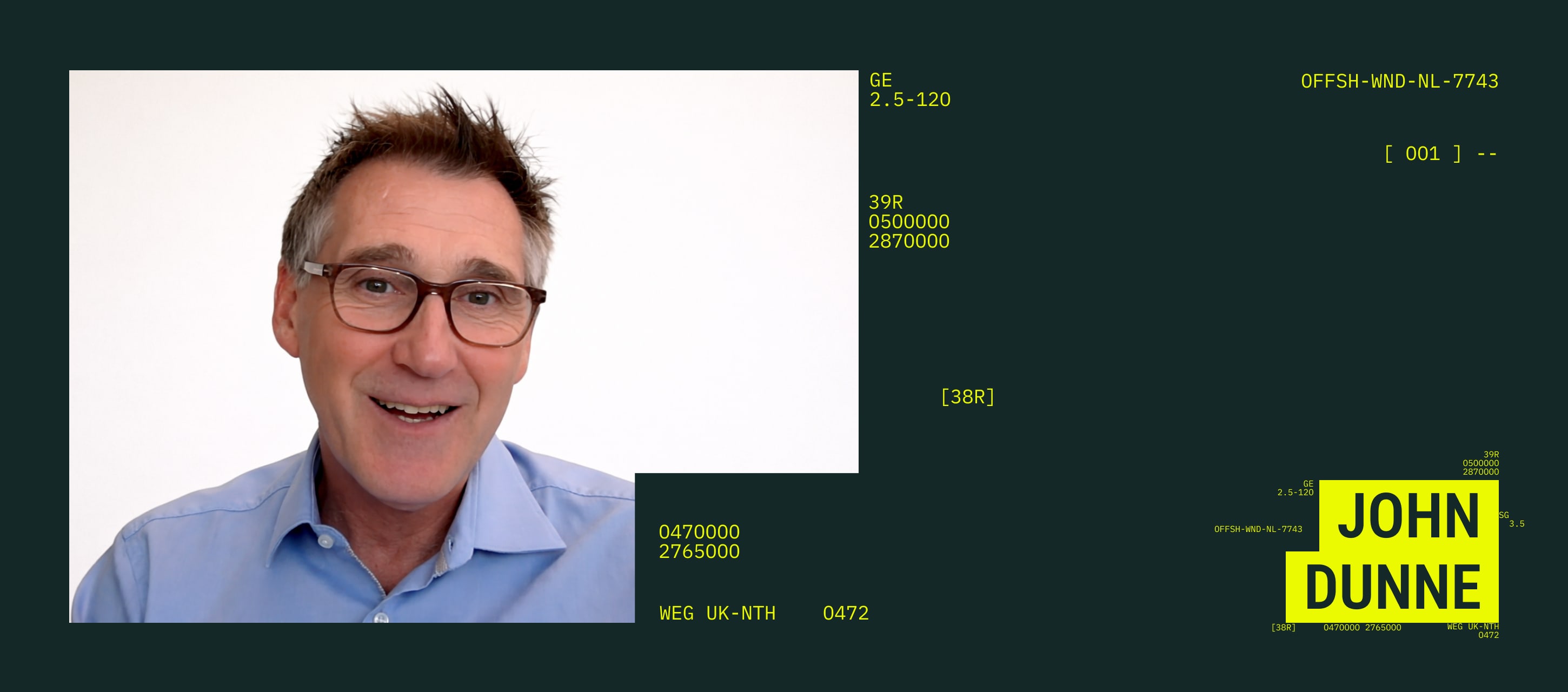
This is a Field Intelligence series, where we spoke with John Dunne, Group Head of Health, Safety, Security and Environment at Red Sea Global — a giga project spanning an area the size of Belgium — who spent the early part of his career as a Royal Navy clearance diver and bomb disposal expert before moving into HSE leadership at some of the world’s largest construction programmes. His view on what most inspection programmes are actually measuring is blunt.
? John tells the full story — from the Navy to 90,000 workers on the Red Sea coast. Go to the full episode →
Working on a safety inspection programme at scale? See how 12,000 field service teams manage inspections, safety, and compliance with Fluix — Try it now →
“99% of Them Are a Waste of Time”
John does not soften this.
“Yes, it’s absolutely ridiculous — we have thousands of inspections and audits. Do they deliver the results I want or pick up what I expect? No, they don’t. 99% of them are a waste of time, to be brutally honest. We tick a box, but they’re not finding what they should because people use a standard checklist and scoring mechanism.”
The specific failure he describes is one I hear consistently from HSE leaders: the inspection found what the form asked it to find, and nothing else. The day before our conversation, John had visited a site and picked up five or six significant issues on a walk-through. His team had been there that morning and flagged none of them — because none of them were on the inspection form.
The scoring system compounds the problem. When a minimum score becomes the benchmark, teams optimise for the benchmark. Everyone clears the threshold. Everyone reports green. And the actual condition of the site becomes secondary to the condition of the paperwork.
His prescription is direct: “Get rid of the form and just go talk to people, look at things, lift the carpet, climb the ladder, and use your eyes and ears.”
That is not an argument against digital inspection tools. It is an argument against mistaking form completion for risk assessment.
The Board Wants Good News. Give Them Bad News Instead
John has reported directly to boards for most of his career — up to and including a Crown Prince as the ultimate stakeholder. His view on what boards misunderstand about safety performance has a counterintuitive structure.
“No news is bad news. Bad news is good news. Good news is actually bad news.”
— John Dunne, Group Head of HSSE, Red Sea Global
The logic holds. If the board sees only good news, one of two things is true: either everything is genuinely under control, or the reporting system is filtering out the problems before they reach the top. The second is more common. “If everyone keeps giving you good news, you’re just sitting on your laurels thinking everything is great, and then when something does happen, it’s a real shock to the system.”
For field leaders preparing safety compliance reports for senior stakeholders, the implication is not to manufacture drama. It is to resist the instinct to clean up the data before it goes upstairs. The board is a resource — people with authority and influence who can act on a real problem if they know about it. Sanitised reporting turns that resource into an audience.
The Data Volume Problem
The more interesting part of John’s argument is not that inspection data is useless. It is that there is too much of it, and the volume creates its own failure mode.
He describes a fatal road accident at a previous organisation. The driver — a supervisor finishing a night shift — aquaplaned off the road. Telematics data showed he had been consistently speeding, not wearing a seatbelt, and using his phone while driving for months prior. His manager had access to all of it. He hadn’t acted on it because he received so much information each month that he couldn’t identify what needed immediate attention.
The inspection data existed. The pattern was visible in retrospect. But the system that generated it provided no mechanism for surfacing the right signal above the noise.
John’s vision for what a better system would do: “It’s got to have exception reporting. You need something that grabs you and says, ‘Of all the stuff you’re reading, you need to look at A, B, and C because this is what’s going to cause you a problem down the line.'”
This is exactly the gap between retrospective and predictive inspection data management — a gap most programmes have not yet closed. The data exists. The infrastructure to act on it in time often does not.
Want to see how inspection findings surface patterns, not just incidents? See how the Fluix Dashboard tracks inspections, KPIs, and findings across all your sites in real time →
Zero Harm: Ambitious Target or Empty Promise?
The zero harm debate resurfaces regularly on LinkedIn and in HSE circles. John was part of the team that launched Balfour Beatty’s zero harm campaign in 2009–2010 — early enough to remember when the concept was new.
His position: the criticism misunderstands what the target is for.
“Zero harm is achievable. It might not happen today or tomorrow, or in five years, but within my lifetime, everyone going home safe is absolutely possible — especially with the advance of technology, better equipment, and better training.”
The argument against zero harm — that it sets an unachievable standard and therefore demoralises the people it is supposed to motivate — is one he rejects on principle. “Why not aim for an extremely difficult goal? I love running and set myself a goal of doing 10 kilometers in less than 40 minutes. I’ve probably got no chance at age 55, but I’m not going to stop aiming for that target.”
The target’s value is not in its achievability. It is in what the organisation becomes while pursuing it. An 80% improvement toward zero harm is a fundamentally different workplace than one that set the bar at “compliant.”
RELATED RELATED 9 essential features of inspection management software
On Technology: Proof of Concept First, Always
John’s relationship with technology is nuanced in a way that gets misread. He describes himself as someone who is frequently assumed to be a sceptic because he pushes back on rushed implementation. He is not. “I actually love it; I just hate paper.”
What he pushes back on is deployment without proof of concept — a pattern he describes watching play out repeatedly across major programmes. A technology gets selected at the senior level, validated in an air-conditioned office, and delivered to workers in tunnels, basements, and scaffolding in rough terrain. When it fails, the people who selected it are surprised.
He blocked a 70 million SAR contract for smart workforce tracking badges — 90,000 of them — because the vendor refused to allow a pilot. His objection was practical: in a Saudi summer, every worker’s temperature and heart rate would be elevated. The system would generate alerts for everyone, continuously, with no way to distinguish signal from noise.
“With technology, it’s about testing and proving the concept is good for the business and will make it safer. If you rush it, it fails completely.”
The principle translates directly to software rollouts. The teams that get value from digital inspection tools are not the ones who deployed fastest. They are the ones who started with a small group, a specific task, and a clear definition of what success looked like — and iterated from there.
Evaluating inspection software for your team? See how Fluix compares to SafetyCulture for field inspection management →
Fluix’s Take: What Field Intelligence Actually Requires
What John describes — inspections that miss real risks, data volumes that overwhelm rather than inform, boards that only hear good news — is the operating reality for most inspection programmes running at scale.
The inspection management software for ops and safety teams that addresses this does three specific things. It makes it easy to capture what actually happened in the field, not just what the form asked about. It surfaces patterns across findings — flagging corrective actions before they become incidents. And it gives the right people — supervisors, safety leads, board-level stakeholders — the right signal without burying it in volume.
Fluix is used by 12,000 field service teams across construction, energy, utilities, and manufacturing to manage their inspections, safety, and compliance from the field.