


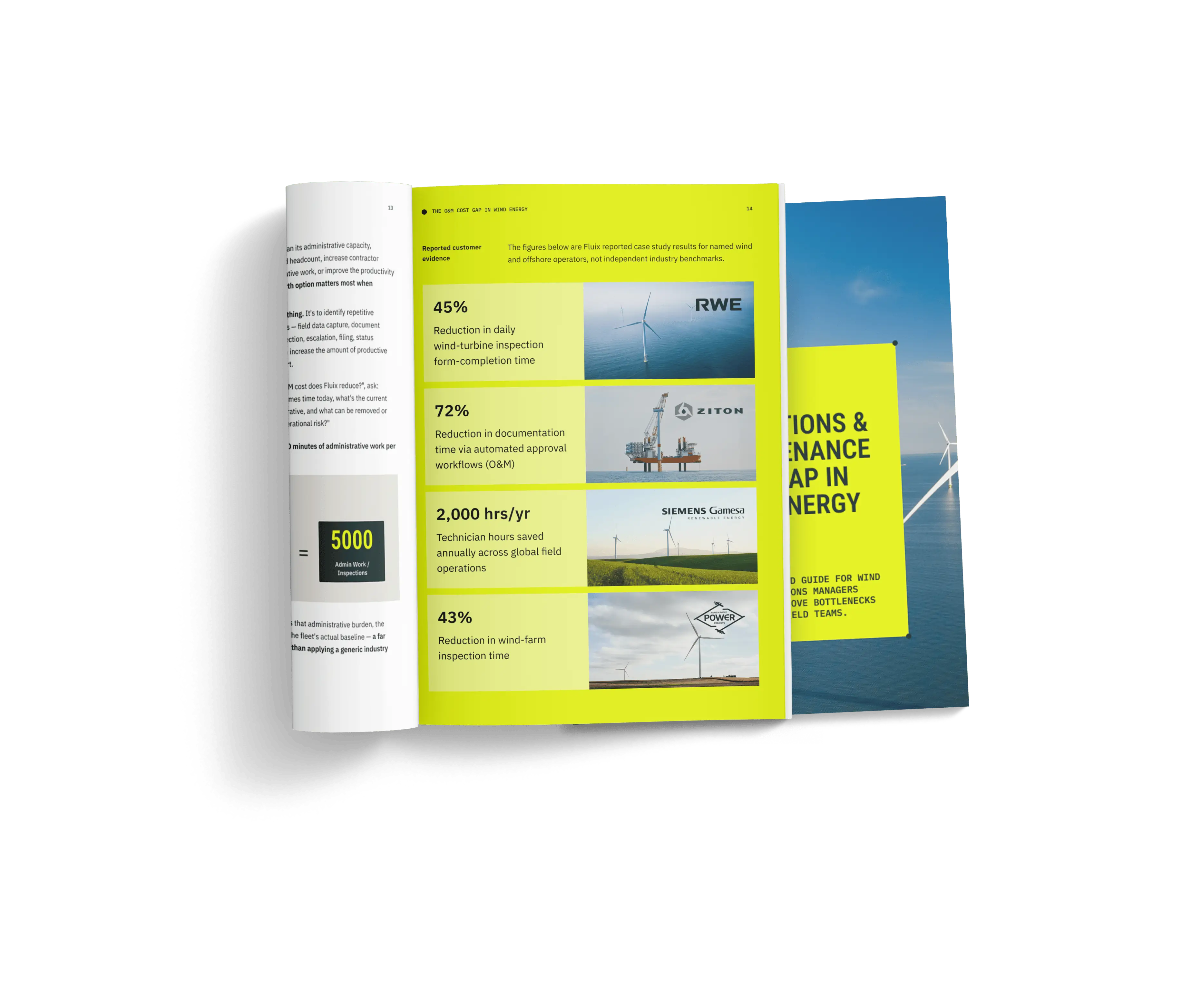
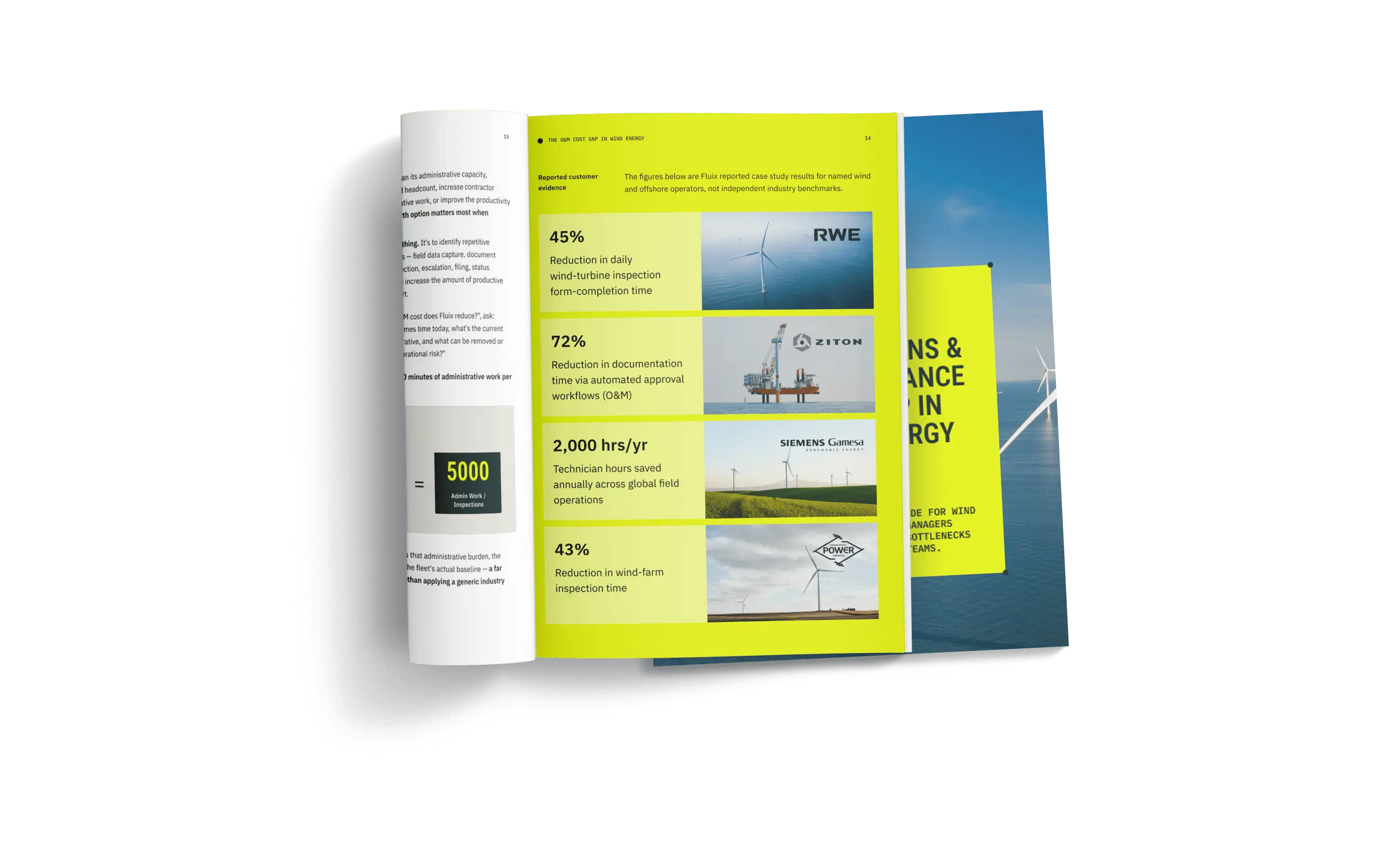
Most wind energy operators are managing larger, more distributed fleets while trying to hold the line on costs, availability, and safety. In reality, the biggest value leakage isn’t major component failure – it’s the cumulative friction of day-to-day operations. The gap between field observations and operational decisions is where time, data, and budget quietly leak away.
This guide is an evidence-led perspective for wind operations managers running distributed field teams. We break down the four operational bottlenecks causing value loss in 2026 and show how connecting field workflows to existing systems removes repetitive work while helping field teams to maintain or improve quality and output.
What’s Inside the Guide:
- The true driver of the O&M cost gap. Why top-quartile onshore wind portfolios outperform the median by 15%, and how day-to-day operational excellence – not just better turbines – is the key to closing the gap.
- The four critical operational bottlenecks. A deep dive into how fragmented field data, administrative drag, compliance friction, and disconnected maintenance planning are slowing down your technicians and supervisors.
- Connecting the field to the office. How to build a reliable field-to-office workflow where inspection results, safety checks, and maintenance decisions flow seamlessly without duplicate data entry.
- The budget argument for automated workflows. Why reducing administrative burden is the most defensible way to build an ROI case, featuring real-world outcomes from RWE Renewables, ZITON, and Siemens Gamesa.
- A practical roadmap for operations managers. A step-by-step guide to mapping, standardizing, digitizing, and automating your recurring field processes without overhauling your entire tech stack.
If you are managing a growing wind fleet and facing budget pressures, adding more administrative capacity isn’t the only answer. The existing operational infrastructure is already there. It just needs a connected workflow.“