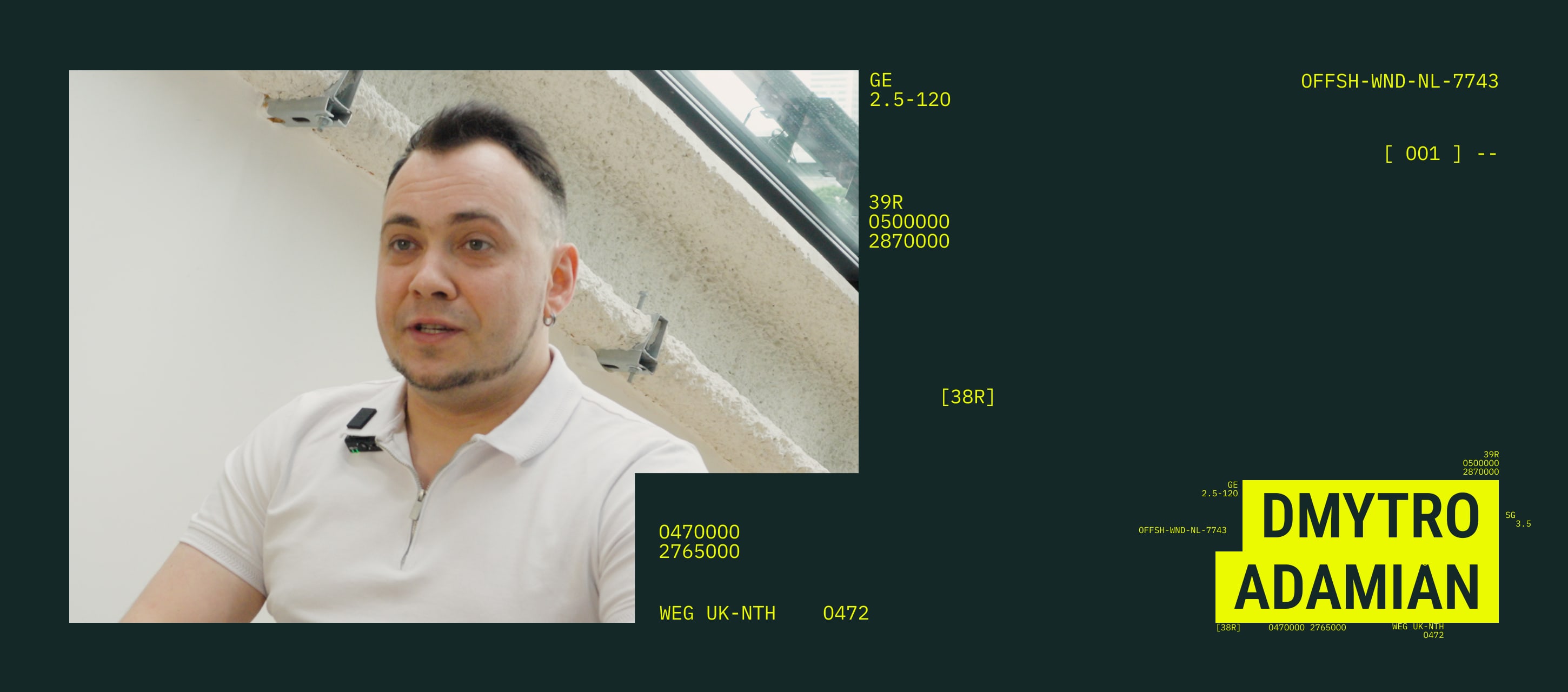
Wind energy teams face challenges that no other industry quite replicates: inspections happen at height, offshore, and in conditions where connectivity disappears. Dmytro Adamian is Principal AE – Wind Energy at Fluix, where he works with operators across Europe and North America on inspection management and compliance documentation. In this interview, he shares what he’s seen change – and what hasn’t – across seven years of working directly with wind energy field teams.
On Shifting Operational Behaviours
I’d say that right now, companies are generally shifting toward integrating more technology into their day-to-day operations, from internal CRMs to solutions for safety management.
Some are going even further, using drones for asset inspections or experimenting with augmented reality for equipment training and diagnostics.
That said, the level of adoption varies widely. Even within the same region, companies can take completely different approaches depending on their size, leadership vision, or digital maturity.
You might see one company using tablets and mobile workflows, while another is still relying on clipboards and spreadsheets.
On Industry Momentum – The Good and The Bad
The positive is the growing appetite for innovation. More companies are genuinely interested in transforming their operations. They’re trying out new tools and processes and are willing to invest in improving efficiency, something that wasn’t nearly as common five years ago.
“The negative? Implementation still takes too long. It’s not uncommon to have a year or two pass between the initial conversation and actually seeing teams use a tool like Fluix in the field.”
This lag is usually due to layers of approvals, legal checks, or internal resistance. Especially in large enterprises, where changing anything – even for the better – requires alignment across multiple departments. And with some renewable companies facing financial and reputational challenges in recent years, decision-makers are even more cautious.
On Why Paper Still Persists And What It Costs
Paper persists mainly because of regulation and inertia. Energy is a highly regulated industry, and many laws were written long before digital processes were common. In some countries, legal frameworks still require physical signatures or documentation to be stored in a locked box for compliance. That creates serious friction when companies try to go digital.
Some clients we’ve worked with want to make the switch, but they face audits and have to prove their digital workflows meet those legacy requirements. It’s a heavy lift in some regions. Others simply don’t have the device infrastructure or internal champions to push it through.
Culturally, change is hard too. People are used to paper. Some just don’t trust digital. Or they fear it will be more complicated than it is.
“The cost of sticking with manual processes is enormous. Direct costs include printing, paper, ink, storage, and replacing lost documents. Then you have indirect costs that are even more damaging, delayed inspections, lost time, and operational downtime.”
We’ve seen cases where an offshore vessel had to turn around because a document was misplaced. That’s tens of thousands of euros lost in a single day. Or projects where entire inspections had to be repeated because paperwork didn’t make it to the right place. Over a year, this adds up to hundreds of thousands, if not millions, in wasted spend.
On “Democratizing” Field Inspections With Tech
Yes, this trend has been developing for a while now. It’s not entirely new, but it’s gaining more traction as the tools improve and field teams become more tech-savvy.
Mobile inspections allow more people, not just senior engineers, to capture and verify data in the field. That means inspections happen faster and more consistently. And it’s especially useful in remote or offshore locations, where sending someone back due to missing paperwork is incredibly costly.
“If you’re working with tablets and digital workflows, a technician can get any missing document synced remotely, even without connectivity – thanks to offline mode. That’s a big step up in efficiency.”
The long-term impact is huge. What starts as a simple win, like one technician saving an hour, scales quickly. Multiply that across hundreds of workers and dozens of projects, and you’re talking about serious time and cost savings. It also makes the industry more accessible, as less-experienced workers can follow clear digital workflows instead of relying on outdated knowledge.
On Standardising Workflows At Scale
With the right systems in place, it becomes easier. The key is documentation. If your processes are well-documented and your tools are set up properly, it doesn’t matter whether you’re rolling out one farm or fifty.
With Fluix, for instance, it’s as simple as uploading the necessary docs and assigning teams. We had one client start on a Monday, and by Friday, 50 people were up and running on their wind farm using Fluix.
As long as your documentation is ready, it’s a matter of minutes to assign teams and push workflows across locations. Standardization becomes a strength, not a hurdle.
On What Digital Transformation Means for Field Teams
For them, it means clarity and efficiency. Every task they perform – installation, commissioning, servicing – requires documentation. With digital workflows, those forms are no longer hand-written, smudged, or lost.
They’re pre-filled, auto-routed, time-stamped, and synced across teams. Technicians don’t have to wonder where to send a form, or whether it was received. Project managers don’t have to chase missing data.
Everyone’s time is spent on the actual work, not paperwork. That’s the real power of automation in the field.
On Underrated Tool More Teams Should Be Using
Any tool that helps you move from paper to digital is a win. It could be a CRM, wind turbine inspection software like Fluix, or even a data visualization tool that turns inspection data into real-time dashboards.
“The energy sector in Europe is still surprisingly paper-heavy. But every step toward digitization improves speed, reduces error, and unlocks new insights. Even just switching forms from Excel to mobile workflows can have a massive impact.”
Take a look at how wind teams manage turbine inspections and maintenance without paperwork in Fluix
On Using Tech to Grow, Not Just Save
Tech reduces delays and accelerates project timelines. That means subcontractors complete more work, and larger companies can take on more projects within the same timeframe.
So yes, it boosts the top line. You’re doing more with the same resources, plus reducing the cost side, which increases margins. Technology gives you a compound advantage: faster delivery, more capacity, and better efficiency.
Questions I Get Asked on Every Call
Why do wind energy companies still rely on paper inspection records?
Mostly regulation and inertia, in that order. Energy is one of the most heavily regulated industries on the planet, and a lot of those regulations predate digital processes entirely. In some countries, the legal framework still requires a physical signature, or documentation stored in a locked cabinet on site.
That creates a real problem for companies that want to go digital. They have to prove to an auditor that their electronic records meet a requirement that was written with paper in mind. That’s a heavy lift, and some teams decide the paperwork of going paperless isn’t worth it.
How long does it typically take a wind energy company to go digital with its inspections?
There are two timelines, and people confuse them. The decision timeline – from first conversation to someone actually signing the contract – can easily run a year or two in a large enterprise. Legal reviews, procurement cycles, alignment across five departments who all have opinions, financial caution after a difficult year. I’ve had conversations that felt promising for eighteen months before anything moved.
The deployment timeline is completely different. Once the decision is made and the documentation is ready, it’s fast.
What does digital transformation actually mean for a field technician on a wind farm?
For the technician standing at the base of a turbine, it means their forms are already half-filled when they open them. The turbine ID, site name, their own name – it’s already there. They fill in what changed, what they found, what the readings were. They attach photos directly to the relevant checklist item, not to an email they’ll send later. They submit before they descend, and the site supervisor gets the record in real time.
What’s the biggest mistake safety officers make when trying to improve field operations?
Trying to solve everything at once. They see the full picture – twenty processes that need improving, three systems that don’t talk to each other, a compliance gap that’s been bothering them for two years – and they design a programme that addresses all of it simultaneously. Then it stalls under its own weight, because getting that many stakeholders aligned on that many changes takes longer than anyone planned, and by the time it moves the original problem has changed.